
Changes to road traffic regulations in 2026
Various changes to road traffic law will come into force on January 1, 2026. These will primarily result in more efficient vehicle registration procedures and more precise environmental requirements. From the middle of the year, new rules on working hours and rest periods for delivery vehicles will also apply to international freight transport.





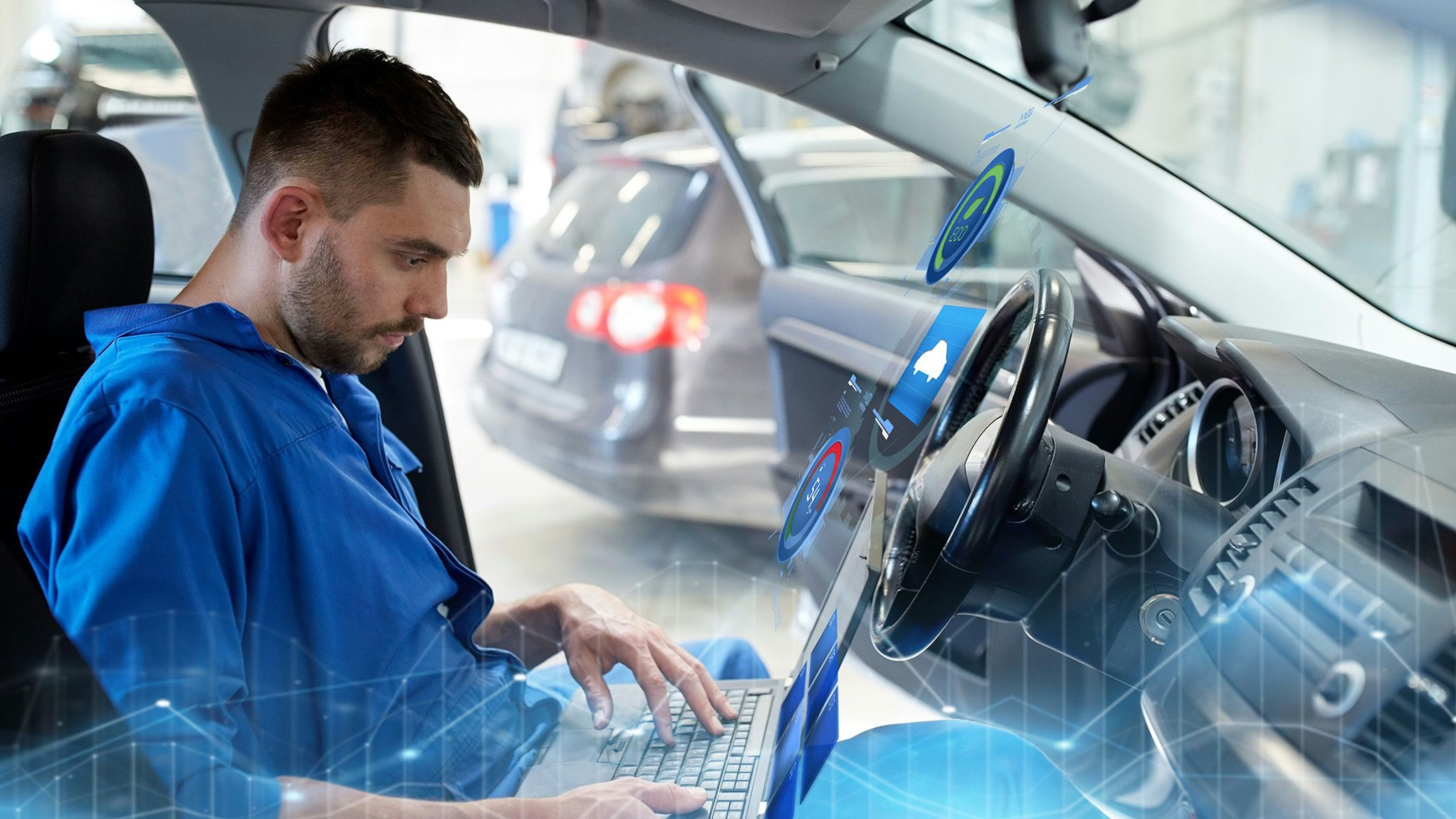
An overview of the most important changes until July 2026:
From January 1, 2026:
Digitization of vehicle registration
With the start of the new year, vehicle registration is becoming more digital and efficient. Electronic EU certificates of conformity (eCoC) can now be obtained directly from European databases. This means that individual vehicle data is available electronically in the Vehicle Registration Information System (IVZ). Manufacturers, importers, dealers, suppliers, freight forwarders, repair shops, and authorities have direct access to the relevant vehicle data.
Payment of CO₂ sanction now a prerequisite for approval
From the beginning of the year, enforcement of the CO₂ Act will be more consistently linked to vehicle registration: vehicle registration certificates and license plates will only be issued if any CO₂ penalties under the CO₂ Act have been paid in full or if the vehicle has been assigned to a new car fleet.
From July 1, 2026
New rules for working hours and rest periods in international road transport
In international freight transport, vehicles and vehicle combinations weighing over 2.5 tons will in future be subject to the Working and Rest Time Ordinance (ARV 1) if the driver spends more than half of their working time driving. Nothing will change for domestic transport. The aim is to promote road safety and fair working conditions in cross-border transport.
All updates can be found on the ASTRA website:
New traffic regulations from 2026
Automated driving and automation systems
With the regulation on automated driving that has been in force since March 2025, Switzerland has a clear legal framework for three defined use cases of automated driving:
Highway pilot:
On highways, drivers may use a highway pilot that temporarily takes over driving, but they must remain ready to intervene at any time. Currently, no vehicles with such a system are yet approved in Switzerland; FEDRO is in contact with manufacturers on this matter.
Driverless vehicles:
Driverless vehicles monitored from a central control center may be used on routes approved by the cantons. In 2025, FEDRO and the cantons approved several pilot projects of this kind.
Automated parking:
Automated parking without a driver present is possible within defined and signaled parking garages and parking areas.
In addition, road users can already enjoy the benefits of approved assistance systems (e.g., adaptive cruise control, lane departure warning systems). Since July 1, 2025, automation and assistance systems have also been part of the theoretical and practical driving tests. In addition, they will also be covered in traffic safety education classes in the future.