
Tests on the compatibility of ski bindings and ski boots
Not every ski binding is suitable for every ski boot. Whether a binding releases reliably depends on the right choice of boot, precise binding adjustment and proper use. This study shows when an increased risk of injury is to be expected.





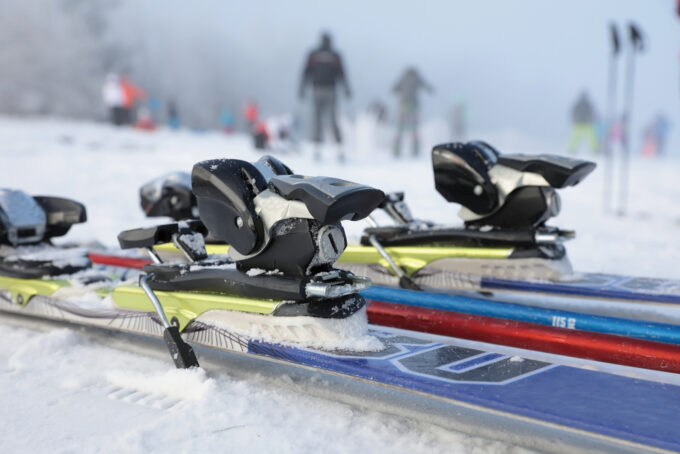
Every year, around 52,000 people in Switzerland are injured while skiing. More than a third of serious injuries affect the knee, 16 % the lower leg and the ankle. Ski bindings are designed to release when a dangerously high load is applied. This can prevent injuries to the lower leg and knee. However, this only works if the binding and boot fit together correctly.
The BFU has therefore tested common combinations of ski binding and ski boot types and analyzed the release behavior. BFU expert Lynn Ellenberger states: «If the binding and boot fit together according to the standard, the release works reliably.» Caution is advised with all other combinations.
Touring ski boots do not belong in alpine bindings
A touring ski boot in an alpine binding is a risky combination. In the test, it led to significantly too high release values - this means a high risk of injury. «While alpine bindings are designed for hard, smooth soles, touring ski boots have a thick rubber sole with a profile. As a result, they have too much friction,» explains Ellenberger.
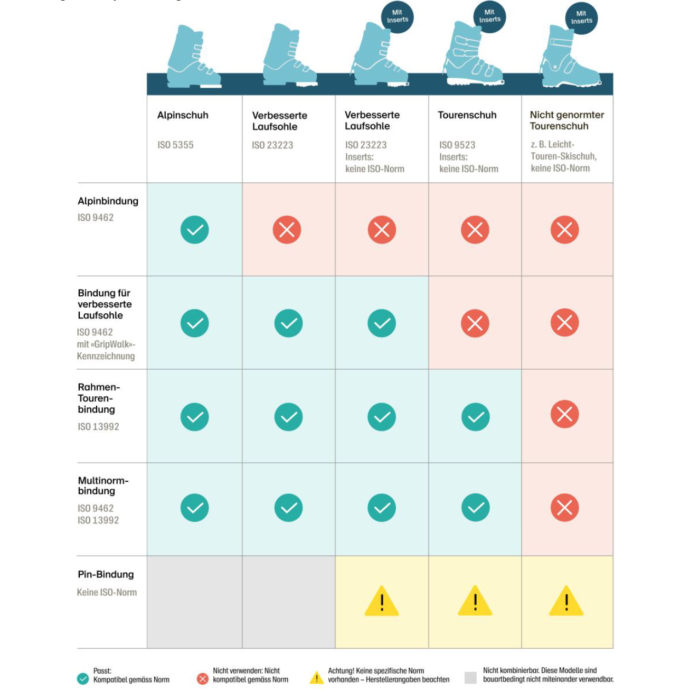
Be careful with touring ski bindings
On ski tours, most athletes now use so-called pin bindings. Two pins clamp the toe of the boot. Two more fix the heel during the descent. These bindings are very light and therefore popular. And they usually have a release function. «But for the binding to open as well as possible in the event of a fall, the heel distance - i.e. the distance between the rear part of the binding and the boot - must be exactly right,» emphasizes Lynn Ellenberger. Adjusting this heel distance is challenging. The BFU therefore recommends having the binding adjusted by a specialist.
The tests have also shown that locking the ascent lever during the descent poses a significant risk of injury. This locking prevents the binding from opening accidentally, for example when making turns. However, it also prevents the binding from releasing in the event of a fall. This can twist the legs dangerously and lead to serious injuries. For this reason, the BFU recommends only locking the bindings when absolutely necessary in tricky passages.
Lynn Ellenberger's conclusion: «The binding must match the ski boot. The best place to get advice is a sports retailer.» And even if the types match, it is important to have the ski bindings adjusted annually by a specialist retailer. Height, weight, age, boot sole length and type of skier determine the personal release value. The value can therefore change from year to year. The BFU ski vignette confirms that the combination works optimally for bindings with a release function (except for pin bindings).
Source: bfu