
Prepared for winter road conditions
Snow, ice, and fog pose numerous hazards. In winter, it is important to prepare your vehicle for the special conditions and to adapt your driving style to the road conditions. The TCS tips will help you stay safe on the road—even on two wheels.





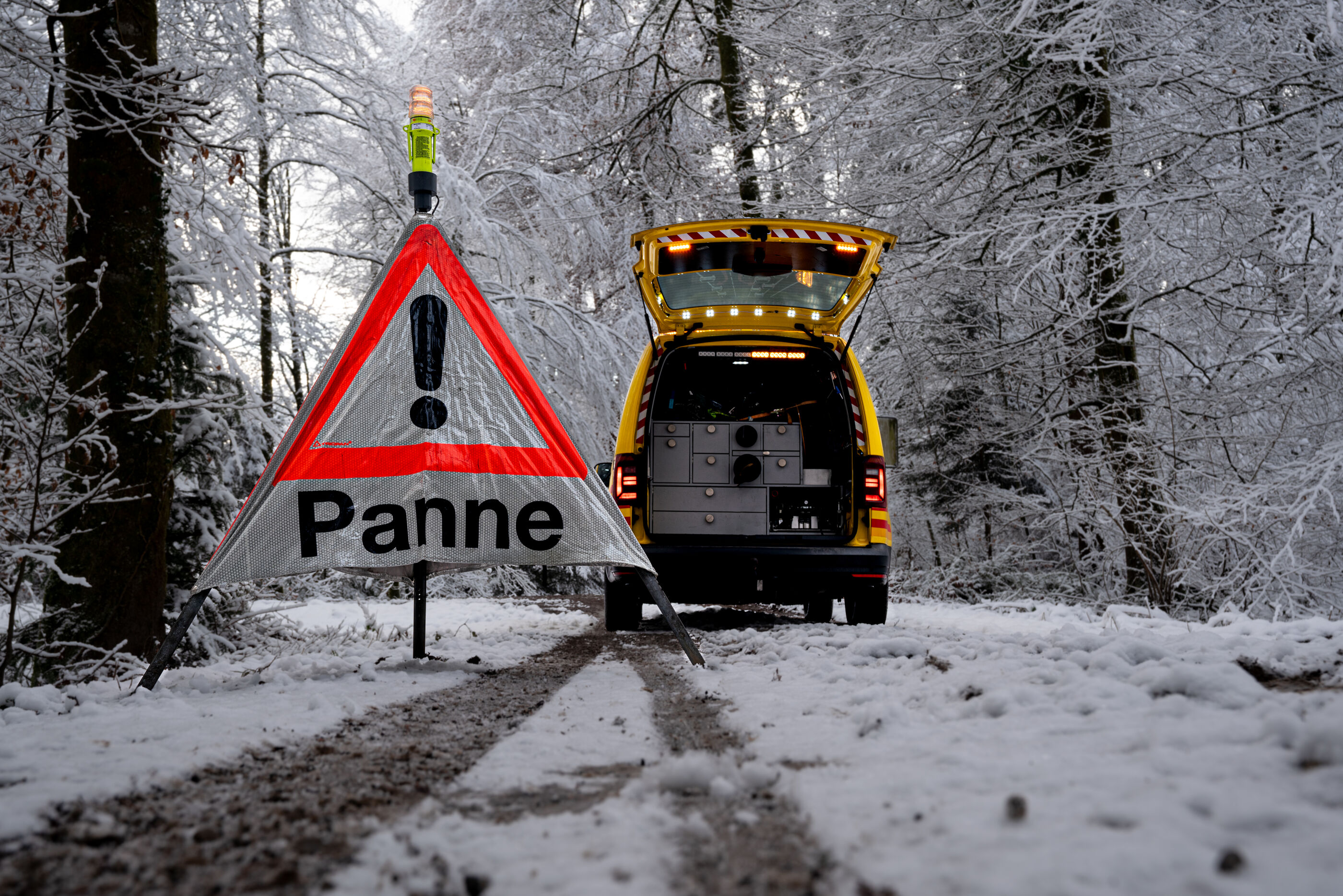 Winter road conditions can be challenging. Even with the right equipment, you can still get into trouble. The most common mistakes when driving in precarious conditions are not adjusting your speed and not leaving enough distance between you and the vehicle in front. Today's cars are significantly heavier than in the past and are sluggish when traction is low. Braking distances can be many times longer in mud, ice, and snow. Furthermore, it is essential that your vehicle is «winter-ready.».
The winter check
In winter, you often drive in the dark, so it is even more important than usual that all headlights and lamps are working properly. Not only to see better, but also to be seen. To check the lighting system, drive one to two meters in front of a bright wall or garage door. First test the parking lights and then the low beams. Turn around and drive backwards in front of the wall to quickly identify any malfunctions in the rear lights. In poor visibility conditions or in tunnels, daytime running lights are not sufficient because the rear lights are not switched on. It is therefore essential to switch to low beams.
The battery is one of the weak points in winter. 12-volt batteries generally have a service life of around five years. However, in winter they are subjected to heavy use due to the cold weather and the use of additional equipment such as seat, steering wheel, and windshield heaters. Battery failures are common during this time, as shown by statistics from the TCS patrol. Failures can be avoided by checking the condition of the battery and replacing it before the cold weather sets in if necessary. If you do not know the exact age of your battery, you can have it checked by a specialist.
In addition, operating fluids such as oil, coolant, and windshield washer fluid must be checked regularly and be frost-proof. The wiper blades should also be checked from time to time and replaced if necessary.
Winter tires with sufficient tread depth are essential for ensuring that your vehicle is roadworthy. The TCS recommends a minimum tread depth of four millimeters. Winter tires are important not only in snowy conditions, but also in low temperatures and on slippery roads. Their rubber compound and tread pattern differ from those of summer tires, thus ensuring greater driving safety. On snow, the braking distance of summer tires can double.
Winter tires for bicycles
Die-hard cyclists who ride their bikes all winter long should also equip themselves with winter tires. The same applies here as with car tires: winter tires have measurably more grip on slippery surfaces thanks to their deeper treads and softer rubber compound.
Spiked tires work very well in snow and ice. However, they are not suitable for asphalt. There are tires that can be fitted like a second «winter skin.» If changing tires on a snowy winter morning is too much for you, it is best to get a second front wheel with permanently mounted spiked tires. In mountain villages without «black clearance,» studded tires are definitely the right choice. Whether with winter tires or studs, you shorten the braking distance and have more grip. This can significantly reduce the risk of accidents.
Winter accessories for good visibility
In addition to high-visibility vests and the mandatory warning triangle, an ice scraper, snow brush, de-icer, gloves, and jumper cables are recommended. Rubber mats are also useful for catching slush from your shoes. If the vehicle is parked outside, a cover on the windshield often saves you from having to scrape ice off it in the morning.
Otherwise, it is best to clear snow and ice from the windshield up to the front camera and at least the front side windows, lights, and rearview mirrors. If a message appears indicating that a particular assistance system is not working due to limited sensor visibility, you may still start or continue driving. You just need to be aware that the vehicle will now only function like an older model, without the assistance system. Avoid applying mechanical force with an ice scraper to a radar sensor or the rearview camera.
On steep, snow-covered or partially icy mountain roads, snow chains are still the safest way to travel on such roads, despite modern tires. Before you get into trouble in the mountains and in the snow, snow chains should be fitted in the garage as a dry run.
Special tips for electric cars
With electric vehicles, it is advisable to warm up the vehicle before driving while it is still connected to the charging station. This can also help to defrost the windows. Snow on the roof, hood, and lights must still be removed with a snow brush. Cold temperatures reduce the range of electric cars because some of the energy is used for heating. To optimize performance, the seat and steering wheel heating can be used, which consume less energy than the interior heating. When fast charging on the road, the integrated route planning should be used for charging stops. This brings the battery to the optimum temperature for fast charging while you are driving. If the car does not have preconditioning, a little more time should be allowed, as the charging stop will be extended by the heating time.
Targeted winter driving training
During driver training, you will learn how speed affects braking distance and how to react correctly in critical situations. In addition to 15 year-round driver training centers in Switzerland, the TCS operates two winter driving centers in the mountains: in Zernez in Graubünden and in Bourg-St-Pierre in Valais. From the end of December to February, special driver training courses are held here on snow, offering a valuable opportunity to gain confidence on slippery surfaces such as snow and ice.
Source: TCS