Intelligent buildings: Siemens presents new generation of fire detectors
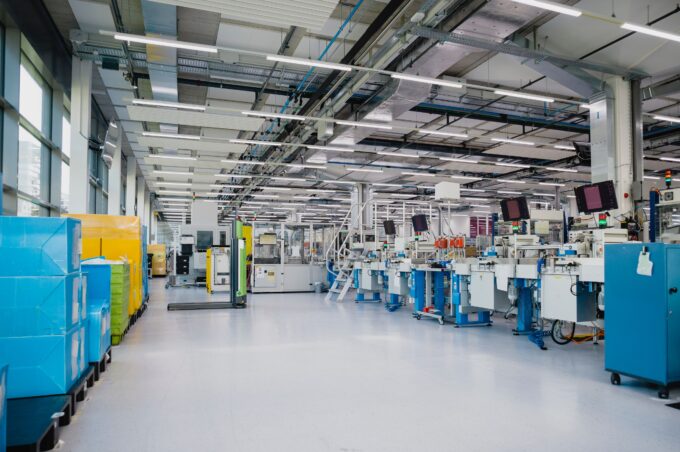
At the Zug site, Siemens provided an insight into the development, production and laboratory testing of its new fire alarm technology. The focus was on continuous system monitoring, reduced false alarm rates and integration into digital building management processes.






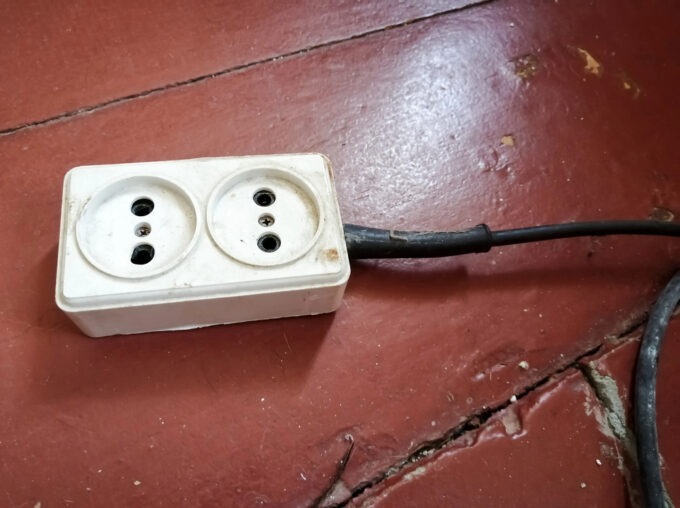
Not every smoke development in a building immediately constitutes a critical fire. An overheated toaster, burnt food or short-term steam development can trigger conventional fire alarm systems, although an on-site inspection is often sufficient. This is precisely where the new generation of intelligent fire detection technology from Siemens AG at the international press event held at the development and production site in Train was presented.
With the new Sinteso Nova and Cerberus Nova fire detectors, Siemens is pursuing the goal of further developing traditional fire detection towards continuously monitored, cloud-enabled safety systems. The focus is on the combination of precise sensor technology, permanent self-diagnosis and digital status monitoring.
Thanks to new technology, fire alarm technology is now even more strongly understood as an integral part of digital buildings.
Live demonstration in the lab
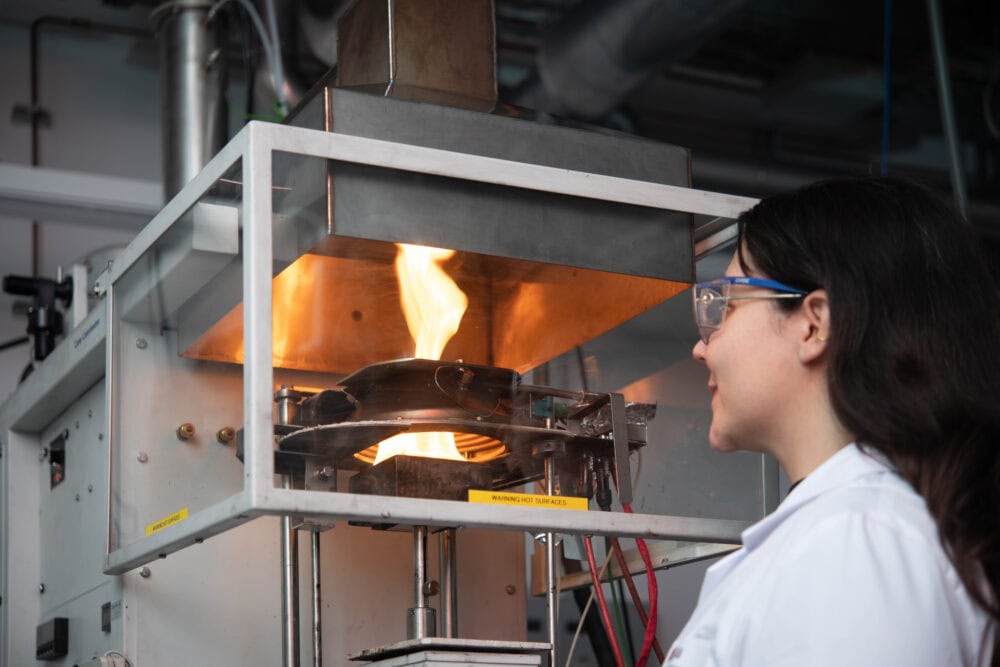
The demonstration in the laboratory, in which a live fire was generated under controlled conditions, provided a particularly practical insight. This showed how fire progression and smoke development affect the sensors.
The laboratory demonstration showed that modern fire detection today goes far beyond simply detecting smoke. The ability to precisely evaluate signal patterns and distinguish between different thermal and optical influences is crucial.
Under realistic conditions in particular, it became clear how strongly the response quality of a detector depends on intelligent signal processing.
Permanent self-monitoring instead of periodic maintenance
The Disturbance-Free Testing technology (DFT) is technically central. Unlike conventional systems, the new detectors carry out self-tests continuously during operation. As a result, sensor statuses are permanently checked, functional deviations are detected early and maintenance intervals can be planned in a more targeted manner. For operators, this reduces potential downtimes and improves the availability of safety-relevant systems.
Monitoring smoke ingress in real time
With Smoke Entry Supervision (SES), the detectors permanently monitor the smoke entry opening. This allows soiling or blockages, e.g. caused by insects, to be detected at an early stage. This condition monitoring increases detection reliability, especially in environments with high dust or particle pollution.
Targeted reduction of false alarms
A key development goal was to avoid false alarms and therefore also evacuations. ASAplus technology (Advanced Signal Analysis) achieves this through optical multi-wavelength sensor technology and dual thermal detection. This enables the system to assess different types of smoke and thermal developments more precisely. This is particularly important in hospitals, data centers and university buildings, where false alarms can have a direct operational impact.
«The launch of our Sinteso Nova and Cerberus Nova fire alarm portfolio is a milestone when it comes to ensuring alarms are as accurate as possible. Through
By moving from periodic checks to continuous, data-based and self-monitoring systems, we are creating the basis for truly human-centered, autonomous buildings,» says Peter Nebiker, Head of Fire Safety at Siemens Smart Infrastructure Buildings.
Cloud connection for predictive maintenance
The complete IoT connection of the new fire detectors enables integration into Building X and thus creates the basis for data-based digital services in fire protection. Cloud-based applications can be used to record and analyze detector status data in real time and make it available across multiple locations. This opens up new possibilities for facility teams and service providers in terms of real-time monitoring, remote diagnostics and predictive maintenance. Particularly in the case of spatially distributed building structures, this provides a consistent overview of the status of individual fire alarm components, allowing maintenance work to be planned in a more targeted manner and potential faults to be detected at an early stage.
The new detectors can be integrated into existing fire alarm control panels without having to replace entire systems. Existing configurations can also be adopted.
Fire alarm technology becomes part of autonomous building functions
With Sinteso Nova and Cerberus Nova, the focus of fire alarm technology is clearly shifting from reactive alarming to continuous data-based security management. The actual innovation lies less in the individual sensor than in the combination of autonomous status analysis, precise event evaluation and digital building integration.