Occupational accidents: Young people and men particularly at risk
In 2013, 6% of the workforce were victims of an occupational accident. Around 750,000 people also reported suffering from a work-related health problem.
Editorial - June 30, 2015
Employees in agriculture suffer the most occupational accidents of all sectors.
How the Federal Office for Statistics reports, around 316,000 people in Switzerland were victims of an occupational accident in 2013. This corresponds to 6% of the working population.
Apprentices continue to be particularly at risk, with around 17% of them suffering an accident at work. Employees under the age of 30 also have more accidents than the average (11%). Men are affected more often than women (8%); the agriculture and construction sectors are five times more affected than banking and insurance. (12% and 11% compared to 2%).
The survey also looked at how many people are affected by work-related health problems. Around 11% of the respondents reported suffering from such problems - not including accidents. In 6 out of 10 cases, these were bone, joint or muscle complaints, and in around 20% psychosocial complaints such as stress, depression or anxiety.
Here, unsurprisingly, older workers were affected significantly more often: 15% of those aged 50 to 64.
The entire publication can be here can be downloaded free of charge.
Kaba: Class action lawsuit settled
The class action lawsuit filed against Kaba in the US at the end of 2010 has now been settled, the company announced today.
Editorial - June 30, 2015
The settlement agreement, which was signed by representatives of the plaintiffs and the Kaba Group was filed, was approved by the competent federal court in Ohio.
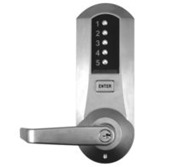
The lawsuit alleged defects in specific models of Simplex mechanical pushbutton locks manufactured by an American subsidiary of the Kaba Group and misleading advertising, according to Kaba Holding in Rümlang ZH. Kaba has always denied the allegations, it said. The settlement provides for non-monetary benefits on the part of Kaba, it said. In an interview in the trade journal "SafetyForum", May issue, Riet Cadonau said, "These benefits, including legal costs, are covered by the provision from the 2010/2011 fiscal year."
Digital Bargain Trap
For one week, fedpol's Cybercrime Coordination Unit and the Stop Piracy association are providing tips and tricks on how to recognize dubious offers on digital sales channels. The online action week "Eyes open!" runs until July 3.
Editorial - 29 June 2015
Louisa thinks she needs to order a new pair of sunglasses before the summer vacations. She enters "cheap brand sunglasses" into Google and immediately lands on a page with unbeatable deals. The store offers a huge selection of the latest models at unbeatable prices. There's only one thing to do: grab them quickly! But oh, what a shock: after just a few days, Louisa receives a letter from customs. The package with the sunglasses, which came from China, was detained on suspicion of being a fake. Louisa never receives a response to her complaint to the operators of the online store. The money is gone and she doesn't have the new sunglasses either.
Counterfeiters are increasingly using the Internet to sell their products. Whether via specially created online stores or marketplaces, the Internet is one of the most important sales channels for counterfeit products. If an offer on the Internet is all too tempting, skepticism is advisable. Behind an online store that appears reputable at first glance and poses as a discount store for brand-name goods, there may be fraudulent gangs. If goods are offered with huge price differences to the original product, caution is advised, as the Federal Office of Police informs. Often, when you place an order on such a website, you receive counterfeit goods or no goods at all. At the same time, sensitive data such as credit card details are placed in the hands of criminals.
Kobik and Stop Piracy provide information on the background to counterfeiting on the Internet in a joint campaign week.
44 new safety engineers
In 2015, 44 new safety engineers successfully completed the EKAS training course.
Editorial - 29 June 2015
At the diploma ceremony on June 26, the new safety engineers will be able to enjoy their new title.
In the current year, 18 German-speaking Swiss, 18 candidates from French-speaking Switzerland and, for the third time in an Italian-speaking class, 8 people from Ticino have obtained the title of safety engineer.
These on behalf of the EKAS training provided by Suva complies with the requirements of the Federal Council Ordinance on the Suitability of Occupational Safety Specialists and promotes the integration of safety aspects at all levels of company management, from strategy to operational implementation in the workplace. Thanks to the system-oriented approach, the safety engineers can advise each company, according to its individual circumstances. This is a fundamental prerequisite for meeting the requirements of the EKAS directive on the involvement of occupational physicians and other specialists in occupational safety.
Prevent accidents, save lives
The number of serious occupational accidents in Switzerland is still high, but has fallen steadily in recent years thanks to major efforts. The EKAS course for safety engineers provides its graduates with the necessary knowledge to actively do something concrete against this fact in the companies. For the EKAS, this course is also a contribution to the active implementation of the EKAS vision "250 lives", which aims to prevent serious occupational accidents through preventive measures and thus save lives. The EKAS is implementing the vision for the cantonal and federal enforcement authorities of the labor law under the label "SAFE AT WORK" um.
Occupational safety means that employees are protected from hazards to their safety and health at their workplace. On the one hand, there are human reasons for this, because occupational accidents cause pain and suffering for the employees concerned and their families. On the other hand, there are also economic reasons: Accidents and work-related health problems cost both companies and society a lot of money.
Attention ticks
Suva and the other UVG insurers register a good 9700 tick bites per year. According to Suva, these are considered accidents under insurance law and cause annual costs of around 7.7 million Swiss francs. How do you protect yourself from ticks?
Editorial - June 26, 2015
According to Suva, the majority of 4,400 tick accidents occur during leisure time, for example while walking or traveling. About 1100 accidents are registered at home or while gardening, 330 while jogging and 700 during other sports and games such as horseback riding, off-road biking and hunting. Tick accidents during work are relatively rare. Although one hundred percent protection against tick-borne diseases is not possible, the risk of a tick bite can be reduced with simple behavior:
In the forest, in gardens and along roadsides, avoid brush and undergrowth to avoid shedding ticks.
Wear closed clothing of a light color (this allows ticks to be detected and removed before they get on the skin).
Use tick repellent for skin and clothing.
After spending time in the forest or garden, check body for ticks.
If a tick is found: Remove as soon as possible (best with pointed tweezers or special tick forceps).
One place to go for questions on the topic is the National Reference Center for Tick-Borne Diseases NRKZ.
Paradigm shift in security
To meet the growing need for security, the Schibli Group opened an additional competence center for building technology and security systems at its Winterthur site in early 2015. The provider recently held its first customer event on the topic of security awareness and the possibilities of today's security systems in the context of modern building technology.
Editorial - June 26, 2015
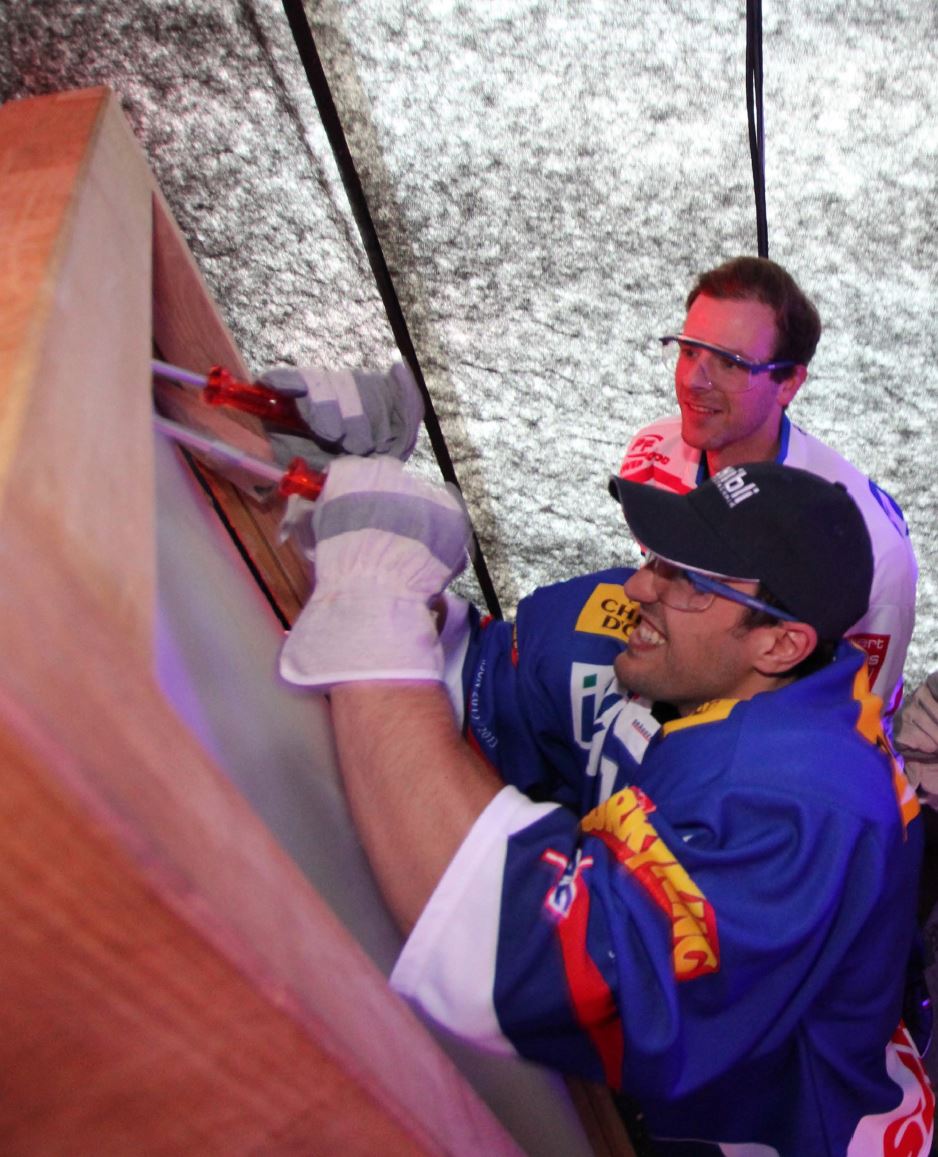
Professional ice hockey players from the Kloten Flyers tested the burglary protection of various security systems in front of their fans.
About 70 interested security managers, planners, suppliers and partner companies of the Schibli AG and the partner company Fand AG followed the explanations of Rudolf Kreutzer from the Center for Systems Thinking. His presentation on "Security Consciousness Update 2015" addressed questions such as: Who shapes our security consciousness? What, if anything, have we learned from past disasters? How are our risks changing? What is outdated about our security awareness and how can we evolve it?
In this context, Kreutzer noted an actual paradigm shift in security awareness: "Our perceptions of threats are changing. The risks and corresponding fears are obviously becoming more and more prevalent. However, we care too much about the risks and too little about the opportunities. Security does not come from protecting the present, but from being open to alternatives. Modern security awareness should therefore not be oriented toward fear, but it should protect confidence."
Find the perpetrator with pictures
In the lecture by Roland Bachofner from the Image Analysis Group of the Zurich Forensic Institute, a joint organization of the Cantonal Police and the Zurich City Police, those present experienced the fascination of forensic image analysis and video surveillance from a police perspective. The expert for person recognition showed how images or videos can be evaluated and what significance they can have, for example, for investigators, a crime sequence, a perpetrator procedure, for the profiling of repeat offenders, a witness interview or the observation of suspects.
Colorful Switzerland" campaign - against hate speech on the Internet
20 years ago, the Swiss electorate approved the criminal law on racism. Therefore, the Federal Commission against Racism launches the campaign "Colorful Switzerland". The aim of the campaign is to raise public awareness of the issue of racial discrimination and hate speech on the Internet.
Editorial - June 25, 2015
"It is also to the credit of this commission that today racism is perceived as a social problem," said Federal Councillor Alain Berset, head of the Federal Department of Home Affairs (FDHA), on the occasion of the 20th anniversary of the criminal norm on racism. The commitment against racist discrimination is a permanent task of all, he said.
Martine Brunschwig Graf, President of the Federal Commission against Racism (FCR), said: "Racism has not necessarily increased. However, it has found a new platform via social media. Anonymity on the net is one of the most important criteria for the spread of racist statements."
The criminal standard on racism is directed against disparaging and discriminatory actions and statements in the public sphere. However, it also protects human dignity on the Internet, which may not be violated under the guise of freedom of expression; incitement to racial hatred and racial discrimination is also prohibited on Facebook, Twitter, blogs and other platforms.
The "Colorful Switzerland" campaign is aimed primarily at young people, but also at all users of new technologies who contribute to a discourse and customs that do not want to give space to racial discrimination on the Internet and social media, the FDHA writes. The campaign will be conducted in collaboration with partners from the public and private sectors, especially education, business, culture and non-profit organizations, it said.
On the occasion of the campaign, which lasted six months, also a virtual platform launched.
"Give us room!"
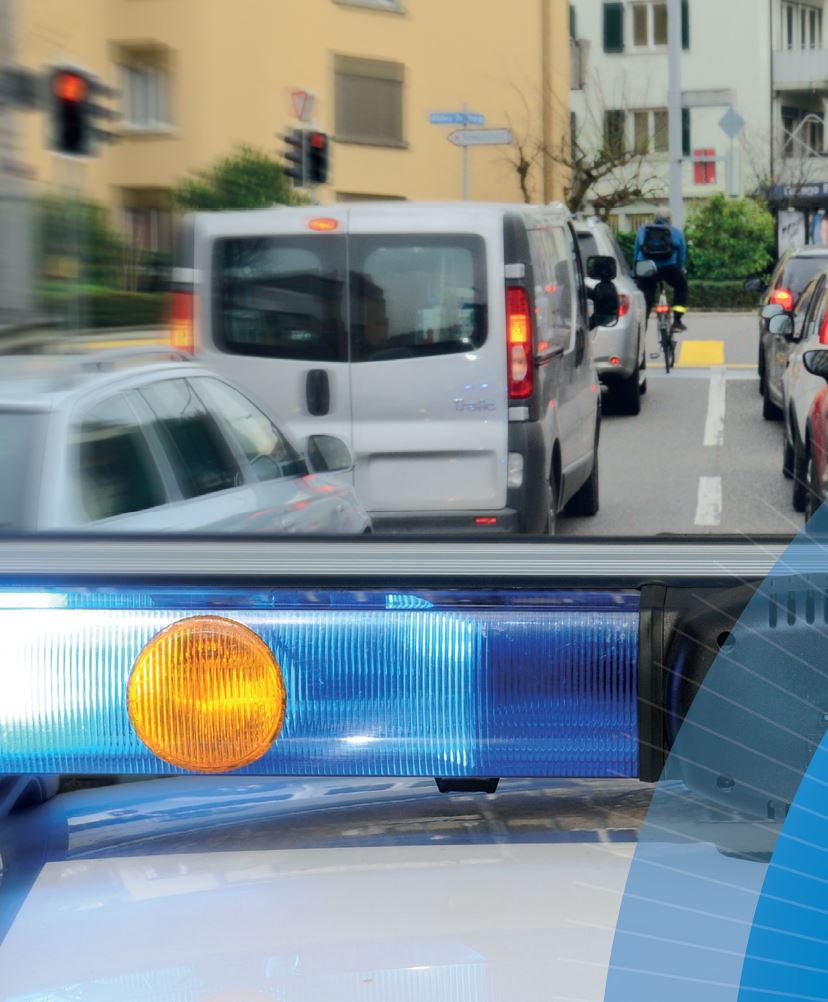
Thousands of emergency trips are made every year by rescue services, fire departments and police. And it is not uncommon for them to find themselves in situations where it is not possible to move forward smoothly despite the special signal. This is often due to the fact that motorists do not know exactly how to react. A campaign has been launched to raise awareness of the problem and highlight the correct way to behave.
Editorial - June 25, 2015
New campaign "Make room for us!"
Imagine: An emergency vehicle is approaching from behind with its special signal switched on. Actually, you should drive to the side. But how? There is a red light in front of you, and no room to the left or right. Running the red light may result in a hefty fine. And now?
Such or similar scenes occur frequently and lead to emergency vehicles being blocked on their alarm drive. In the worst case, delicate situations can arise in which car drivers endanger themselves or others through careless and nervous actions.
Schutz & Rettung Zürich, the Zurich and Winterthur city police forces and the Winterthur rescue service are now jointly launching an awareness campaign aimed at all motorists. Starting today, for about two weeks, the message "Make room for us! - Thanks to your help, we can help faster." will be distributed on posters, flyers and with a TV commercial. Essentially, it is about two situations that occur again and again in the everyday life of the emergency services: Vehicles stopped in front of red lights and not making way and stopping at bottlenecks, such as traffic islands.
The three main messages are:
As a general rule, the following applies to approaching emergency vehicles with their special signals switched on: Keep calm and move out of the way at a suitable place.
Make way even when the light is red and, if necessary, drive carefully over the stop bar. Pay attention to the following and crossing traffic. Even if you are flashed, you do not have to expect a fine.
Thank you for pulling over and stopping. But please do not do so at bottlenecks such as road works and traffic islands.
The participating blue light organizations hope to reach as many people as possible with the campaign and thus create clarity in one or the other traffic situation.
Social media and crime
What are the implications of social media for Switzerland's internal security? What are the police doing to stop criminal schemes? These and other questions were addressed today at the 14th "Internal Security" forum of the Association of Swiss Police Officers VSPB, in Bern. Around 180 police officers, politicians and other interested parties discussed social networks and crime.
Editorial - June 24, 2015
f.l. Sébastien Fanti (Lawyer and Data Protection and Public Information Officer of the Canton of Valais), Dr. Stefan Blättler (Commander of the Bern Cantonal Police and President of the KKPKS), ), Adrian Plachesi (Moderator), Corina Eichenberger-Walther (Member of the National Council)
The unanimous finding of the congress was that the risks lurking therein are underestimated at all levels. That is why VSPB-President Jean-Marc Widmer: "Politicians must also become aware of this and provide the guarantors of internal security with the appropriate instruments."
Social networks such as Facebook, Twitter, YouTube and the like enrich everyday life. For many, a day without them is no longer imaginable. However, you should definitely think carefully about what and how you communicate, because social media is the virtual village square of today. "Don't post anything on your channels that you wouldn't print out and hang next to the village fountain," recommended Jean-Marc Widmer, President of the Association of Swiss Police Officers (VSPB), in his opening speech, emphasizing: "The Internet forgets nothing and, as is known from cybercrime, people with criminal intentions always find a way to gain the access they want."
"Once on the Net, always on the Net!"
In his introductory presentation focusing on fraud, bullying and violation of privacy, Prof. Dr. Werner Hartmann, an expert in digital media, showed how easily criminals can achieve their goals. He demonstrated this, for example, with a fake Facebook presence for the head of communications of the VSPB, saying: "Tomorrow morning at the latest, he will have certain problems when he leaves the house. Because, once on the net, always on the net. There also a right to delete or forget is of no use!" He went on to give several examples of how effectively social engineering works and how easily it can be used to obtain secret information. That's why we should stop looking only for technological solutions and neglect the human factor: "We have to let go of the belief that in a globalized world we can ensure security, trust and openness with yesterday's methods. We first need an understanding of the digital world." That is why legislation and jurisdiction must be adapted to the digital age as quickly as possible.
Territorial borders vs. borderless network
According to the Federal Prosecutor, Michael Lauber, the partial relocation of criminal acts into virtual spaces would not release the prosecution authorities from the need to produce real evidence that can be used in court. In order to be able to ascertain corresponding evidence according to criminal procedure standards, "level playing fields" between law enforcement and the perpetrators would therefore also have to be created in the area of modern communication technologies. "The Internet must not be a lawless space," said the federal prosecutor, stressing that prevention and education are very important alongside repression.
Police can benefit from social media
The commander of the Bernese cantonal police and president of the Conference of Cantonal Police Commanders KKPKS, Dr. Stefan Blättler, pointed out the challenge and opportunities of social networks for daily police work. "The Internet has certain characteristics that present the police with a new challenge. These include speed, high reach, uncontrollability and anonymity," said the president of the KKPKS and emphasized, "In addition, technical knowledge is essential for law enforcement, because the subject matter is very complex." It is a challenge for the police to actively control the communication flows, he said. After all, this is the only way to maintain control over the interpretive sovereignty of the digital public. In this context, he says, it is essential that the corps concerned always present the situation in a factual and objective manner, even though social media works with a lot of emotions and likes to dramatize. On the other hand, he said, those who actively use social media can also use it for their own purposes. "With the bundling of forces and targeted use, I am convinced that we can keep up with the new developments, even use them for our own benefit, and perhaps even become friends," emphasized Dr. Stefan Blättler, citing as an example the de-escalating effect in the presence of false rumors by cogently refuting them on social media. Also in the recruitment of new employees or the control of crowds, also called crowd management. At large events, these new communication tools would help in the daily work.
Mercenary companies banned in Switzerland
A company that provides security services abroad is now subject to a reporting obligation. Furthermore, as of September 1, 2015, so-called mercenary companies will be prohibited in Switzerland. The Federal Council has decided to bring the Federal Act on Private Security Services Provided Abroad (BPS) and the associated ordinance into force on this date.
Editorial - June 24, 2015
Any domestic company wishing to provide private security services abroad must notify it in advance.
The new Federal Law on Private Security Services Provided Abroad (BPS) is intended to help preserve Swiss neutrality and guarantee compliance with international law. It applies to companies that provide security services abroad from Switzerland or carry out related activities in Switzerland. Also covered are federal authorities that commission security companies to perform certain protection tasks abroad, and companies based in Switzerland that control security companies operating abroad (holding companies).
Armed conflicts: no participation
Security companies based in Switzerland may not participate directly in hostilities in the context of an armed conflict abroad. The prohibition of mercenary activities includes the recruitment, training and placement of personnel in Switzerland and abroad. Activities that promote serious human rights violations are also prohibited. For example, a prison cannot be operated in a state where torture is known to occur.
Obligation to report
Any company wishing to provide private security services abroad must first notify the competent authority, i.e. the Political Directorate of the Federal Department of Foreign Affairs (FDFA). Notification is required, for example, for the protection of persons and the guarding of goods and properties if they take place in sensitive environments or situations, but also for the control of persons or the care of prisoners. In a first step, the Political Directorate of the FDFA decides within fourteen days whether the reported activity gives rise to the initiation of an investigation procedure. If the reported activity is in conflict with the purposes stated in the law, it will be prohibited in a second step.
Various control measures ensure effective implementation: Under certain conditions, the Political Directorate of the FDFA can inspect a company's business premises without prior notice and inspect business records. Violations of the law are punishable by imprisonment of up to three years or a fine.
Routine Services
The implementing regulations provide for a simplified notification procedure in certain cases. These are routine services (e.g. protection of a supermarket or a shoe factory in a sensitive environment). Here you will find the explanatory report of the FOJ on the Ordinance on Private Security Services Provided Abroad (VPS).
58% of all occupational accidents take place in the service sector, according to accident statistics, most of them due to tripping or falling. Many of these could be prevented by simple measures.
Editorial - 23 June 2015
Not like this: Open drawers and boxes standing around are tripping hazards in the office.
Workplace accidents could often be avoided - and that goes for office workplaces, too. These 10 tips ensure a safe and healthy office:
Keep floors clear: Anything standing around on the floor can become a tripping hazard. Do not place boxes and piles of paper on the floor and make sure cables are neatly tucked away. Always close drawers and cabinet doors after opening them.
Use climbing aids: Office chairs are not suitable for reaching the folder in the top row. Provide safe stepladders for the employees.
Non-slip floors: Stone or slab floors can become very slippery, especially when wet. Carpets can help here - especially in the entrance area, where employees come in with wet shoes when it rains. But beware: carpet ears can in turn become tripping hazards!
Fasten racks: Incorrectly loaded racks or bins can tip over. Secure them to the wall and place heavy items near the floor, lighter ones on the upper shelves.
Lifting and carrying: Lifting and carrying heavy loads incorrectly can cause back injuries - this also applies in the office. Carrying close to the body with a straight back, suitable means of transport and good physical fitness reduce the risk of injury.
Safe stairs: 14800 of the accidents in 2012 took place on stairs. Good lighting and handrails can help here.
Mark thresholds and edges: Clear markings reduce the risk of a tripping accident.
Avoid temporary solutions: Provisional devices and wiring are often not safety compliant. Fix provisionals as soon as possible.
Ergonomics: Anyone who spends the whole day in the wrong posture at the PC must reckon with postural damage. Individually adaptable furniture, correctly adjusted workstations and employee training on ergonomic work can prevent this.
Avoid stress: Stress, hectic activity and overtiredness play a central role in many accidents. Appropriate work requirements and a realistic workload help to avoid this. Also debt employees on the subject of self-management: Efficient work, good time management and the topics of nutrition, relaxation and exercise should be the focus here.
Abraxas under the sign of strategy implementation
For Abraxas Informatik AG, 2014 was all about strategy development and implementation. According to the company, it invested heavily in new services and products.
Editorial - 23 June 2015
According to CEO Félix Mauron, two factors had a negative impact on the result for the 2014 financial year.
The Abraxas Group's consolidated operating income of CHF 105.22 million was below the previous year's figure. Net income was also lower at CHF 5.17 million. The execution of large, innovative projects, the elaboration of the new corporate strategy and the development of new products and services tied up a lot of resources in 2014 and will continue to do so in 2015, according to the statement.
"There are two main factors that have negatively impacted Abraxas' results," explains Abraxas CEO Félix Mauron. "On the one hand, our business is changing from long-term pre-financing deals to projects that are paid for after completion. This leads to large fluctuations in long-term projects. On the other hand, the public sector is under great pressure to save money, which has not exactly lessened after the Swiss franc exchange rate was freed up. As a long-term partner, we support our customers in optimizing costs." At the same time, Félix Mauron is convinced that the new strategy will lead to Abraxas returning to the growth path in the medium term.
On the one hand, the company's new strategy focuses on the development of new products and services, for example in the areas of e-government as well as cloud and mobile computing. On the other hand, it provides for geographical expansion throughout Switzerland. In addition, the strategic strengthening of the sales organization has already been implemented with the creation of a new Sales and Business Development division.