Innovation Seminar

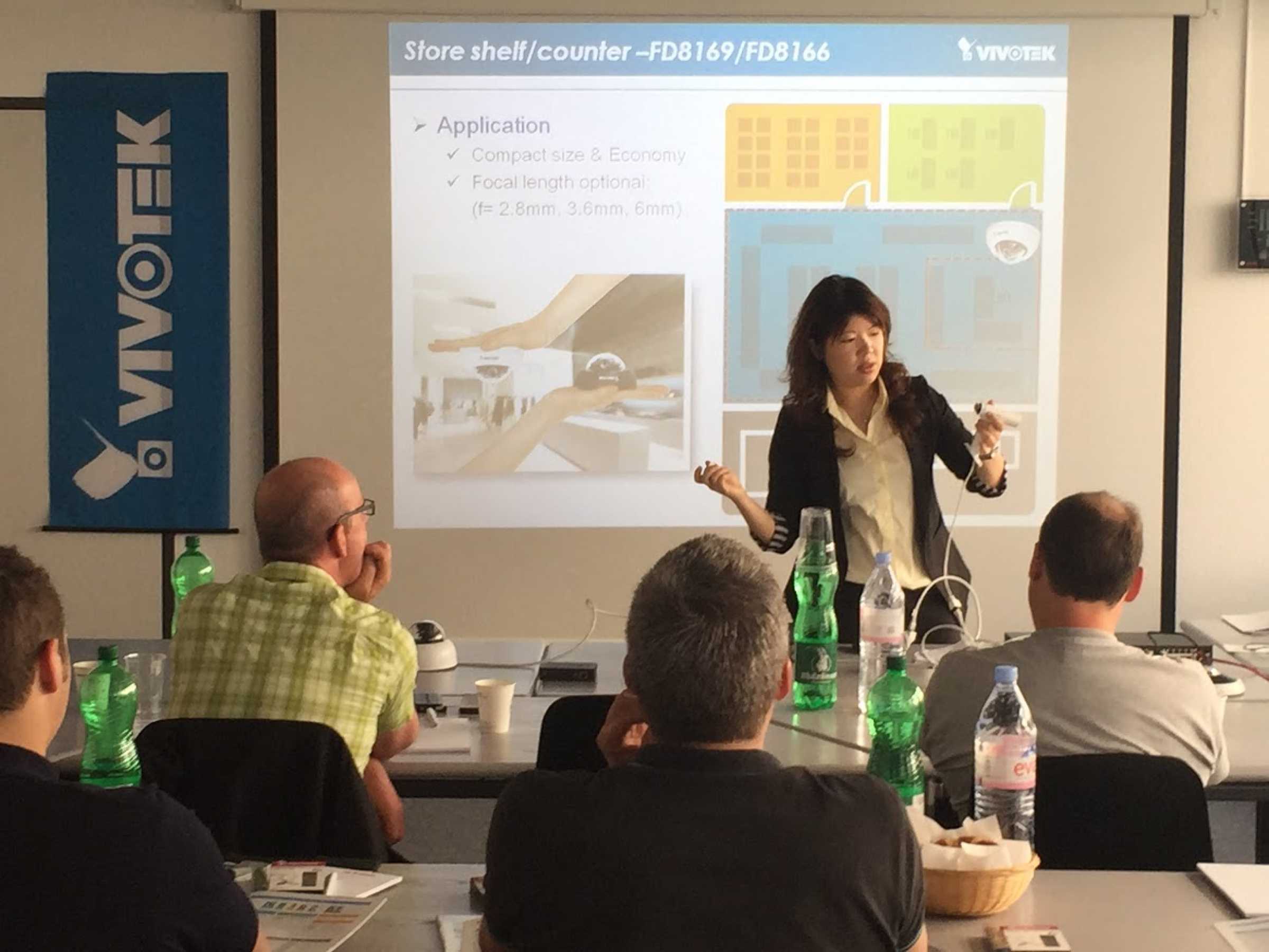
As the exclusive Swiss trading partner of Vivotek, Rotronic recently provided information about the manufacturer's innovations at a seminar. About 20 professional installers learned about the news in the field of video surveillance.

The manufacturer Vivotek informs about its latest innovations.

Vivotek was founded in 2000. Initially, the Taiwanese manufacturer developed and produced mainly for companies like Abus, Cisco and D-Link. In the meantime, the manufacturer concentrates exclusively on its own brand with its product developments. For example, at the 2014 World Cup in Brazil, more than 300 Vivotek Speed Dome cameras were used to ensure security in and around the stadiums.

With IP cameras, network video recorders, PoE solutions and video servers, the Rotronic offers a comprehensive range of products from the Taiwanese manufacturer.

At the seminar, specialists from Vivotek presented their latest products:

  • Currently the smallest fish-eye camera in the world, the FE8180.
  • New managed PoE switches with advanced features for security applications, especially for managing cameras.
  • The daisy chain - a linking of several cameras. Only one camera is attached to a network switch, the second camera is connected directly to the first camera. This significantly reduces the installation effort.

Founded in 1965, the trading and manufacturing company Rotronic offers a wide range of solutions for dealer and industrial customers. The business areas include products for measuring humidity, temperature, CO2 and differential pressure. Furthermore, solutions for safety systems, in the field of 19" technology, in uninterruptible power supply are also included.

The company works closely with selected suppliers, offering installers advice and a complementary range of video surveillance, networking and data storage products.

Product management strengthened

For a few weeks now, Michael Unger has been working at Salto Systems' corporate headquarters as Vice President Product Management.

Michael Unger (center), Vice President Product Management, surrounded by Javier Roquero (l), Chief Executive Officer (CEO), and Marc Handels (r), Chief Marketing & Sales Officer (CMSO) of Salto.

In his new position, Unger acts as an interface between development and marketing, as the Company writes. He will further develop the product portfolio and will be significantly involved in the preparation of product specifications and the prioritization of development projects, the company says.

The 43-year-old business economist was previously with Evva, where he worked for 24 years in various areas and positions. In 2002, he moved to the newly established Product Management division, where he was responsible for Salto products within the Evva Group.

BÜPF: Swico would support referendum

The trade association of ICT providers, Swico, intends to support a possible referendum against the law on telephone and telecommunications surveillance.

Under fire: The Telephone and Telecommunications Surveillance Act

The National Council, as the second chamber, passed the law concerning Telephone and telecommunication surveillanceBÜPF for short. As in the Council of States, the well-founded criticism and justified objections from youth parties, society and the ICT industry bounced off the parliamentarians, as the Swico writes. The law - if it comes into force - would result in drastic restrictions on civil rights, but also massive cost consequences for the ICT industry, according to the association of ICT providers. The Swico board therefore voted by a large majority to actively support a possible referendum, provided it is carried out on a non-partisan basis.

The fact is that law enforcement agencies must continue to develop their arsenal in order to keep pace with technological progress and respond to new forms of crime. However, such an expansion of the toolkit must always keep in mind the principles of an open and democratic society as well as the individual rights and privacy of citizens. Not everything that would be technically feasible and desirable from the point of view of the law enforcement authorities is compatible with society and citizens, as Swico emphasizes. According to the association, the mandatory introduction of surveillance measures that are not or rarely used in practice is objectionable and burdens the economy, especially the ICT economy.

The bill as a whole is one-sided and excessive in content. It places law enforcement above civil rights and the right to privacy without being able to sufficiently justify their necessity. The message rides on the wave of a diffuse fear of crime of all kinds and the unease of the state authorities about the enormous (positive and negative) potential of the Internet. The twelve-month data retention period, the introduction of state Trojans, and the blanket dragnet via IMSI catchers are hardly effective and at the same time disproportionate and cost-intensive encroachments on our civil liberties, as the association writes in conclusion.

Money laundering risks

The Federal Council has taken note of the first report on the national assessment of money laundering and terrorist financing risks in Switzerland. The report shows that Switzerland is not spared from financial crime and remains attractive for laundering the proceeds of crimes committed mostly abroad.

The analyses in the Report are based on both quantitative and qualitative data obtained from public sources or provided by various federal and cantonal agencies and private sector actors. In terms of predicate offenses, fraud and embezzlement, corruption and affiliation with a criminal organization represent the main threats to the Swiss financial sector.

The overall assessment of money laundering risks revealed a medium risk for all areas subject to the Anti-Money Laundering Act (AMLA), although this risk varies from area to area. The greatest risk is identified in the universal banks. Thanks to the measures taken to combat money laundering, however, vulnerabilities are significantly reduced, so that despite the increased risk, it can be assumed that risk management in this area is adequate. The same applies to the following areas: Private banking, asset management, legal professions, fiduciary business, and money and value transfer services.

The analyses have shown that the risk for the insurance, casino and credit services sectors in Switzerland is low. The other areas analyzed (retail banks, securities trading, precious metals trading, money exchange transactions, payment services) are exposed to a medium risk. However, the measures in place to prevent and reduce the risk of money laundering and terrorist financing are commensurate with the risks identified.

Terrorist Financing

For terrorist financing, the analysis also revealed a limited risk, but one that could have a significant impact if it were to materialize. Moreover, the risk could increase if terrorist financing networks were to use alternative money transfer systems in Switzerland more systematically. This would increase both the exposure and the vulnerability of our country.

Currently, the financial intermediaries most exposed to terrorist financing are banks, service providers in the field of money and value transfer, and in the credit business, usually involving small amounts. The authorities cooperate closely in this area, both at the national and international levels. Continuing and strengthening this cooperation, particularly between intelligence agencies, further raising awareness among those potentially affected by terrorist financing, and using other available legal bases to combat terrorist financing are essential if the risk is to be contained.

Furthermore, six areas that are not directly subject to the AMLA were examined. The Interdepartmental Coordination Group on Combating Money Laundering and Terrorist Financing (KGGT) concludes that the current system adequately addresses the risks. Nevertheless, it proposes some measures for improvement.

The KGGT is of the opinion that the legal disposition for the areas subject to the AMLA, which was completed by the Federal Law of December 12, 2014 implementing the 2012 revised recommendations of the FATF, adequately addresses the current money laundering and terrorist financing risks overall. It also considers that the application of the tools provided by the legislation should still be improved at the operational level. For this reason, the KGGT recommends in its report eight measures to consolidate the current disposition. These include the promotion of the dialogue between the public and private sectors, the development and systematization of statistics, as well as specific recommendations for future analyses and concerning the investigations carried out in the sectors not subject to the MLA, namely the real estate and commodities sectors, foundations and bonded warehouses.

The national risk analysis is a continuous process. The report will have to be updated and supplemented with other reports and analyses so that the effectiveness of the Swiss system can be assessed and new hazards can be countered.


ETH: Expansion of information security

ETH Zurich can expand the Zurich Information Security and Privacy Center.

Information Security
From left to right: Chairman of the Bank Council of the ZKB, Jörg Müller-Ganz, ETH President Lino Guzzella and Jürgen Dormann, Chairman of the Board of Trustees of the ETH Zurich Foundation, at the signing of the contract. (Image: ETH Zurich / Peter Rüegg)

This is made possible according to the online portal ETH News an earmarked donation by Zürcher Kantonalbank to the ETH Zurich Foundation in the amount of five million Swiss francs over the next ten years.

Information security is one of the strategically important research focal points of ETH Zurich, which the Department of Computer Science in particular has been intensively investigating for years. The planned expansion of the Zurich Information Security and Privacy Center (ZISC) will strengthen research, education and training in this area.

According to Director Srdjan Capkun, a central component of the new ZISC is the planned "ETH-ZISC Open Lab". This will be an open platform where scientists and IT specialists from the partners and companies involved in ZISC will be able to engage in a lively exchange of ideas. Those involved hope that closer contact between researchers and business representatives will enable the needs of industry to be met even better and that a rapid transfer of research results into everyday applications will result. Workshops, seminars and conferences will be held regularly. The Open Lab will offer space for 20 students, researchers and business partners. Such an exchange platform has been a great need for a long time. The donation will finally make it possible to set this up.

Locally, the ETH-ZISC Open Lab is close to the Institute for Information Security of the Department of Computer Science.

The detailed article by Peter Rüegg can be here can be read.

Lightning as a fire trigger

About 10,000 lightning strikes hit buildings in Switzerland every year: This means that every third fire damage is due to a lightning strike.

A good lightning protection system in particular helps here.

Direct lightning strikes usually cause the greatest damage. In the worst case, they can set entire buildings on fire explosively. Indirect lightning strikes result in damage to electrical equipment such as televisions, computers or heating controls and are more common, as the Fire Prevention Advisory Service (BfB) writes.

Lightning also strikes next to towers, trees, power lines, and near bodies of water. Lightning is unpredictable and can strike several times in the same place. Lightning protection systems do not prevent strikes, according to BfB, but they do protect buildings from major damage. They would dissipate the lightning strikes and ensure that lightning is virtually harmless to buildings. Although the installation of such a system is only mandatory for particularly endangered buildings, a general installation is recommended. The cost of a lightning protection system would usually be one to two percent of the building insurance value.

According to the BfB, in buildings without lightning protection systems, the power plugs of electrical devices such as televisions and radios should be disconnected during a thunderstorm. It is recommended to have a surge protector installed by a specialist.

The following precautions apply during thunderstorms in houses without lightning protection systems:

  • For sensitive electrical appliances such as televisions and computers, it is worth installing a surge protector. Otherwise, the plugs of the devices should be unplugged during a thunderstorm.
  • Avoid contact with gas and water pipes, electrical installations or antenna cables.
  • In the middle of the room is the safest during a thunderstorm. Protection is also provided by cars, railroad carriages or camping trailers.

Salt consumption in Switzerland is too high

According to health organizations, the salt consumption of the Swiss is far too high. This has an impact on health.

We eat almost twice as much salt as recommended by the WHO.

Experts agree that salt consumption in Switzerland is too high and is detrimental to health. Medical societies and health organizations have joined forces as a broad alliance in the "Salt and Health" expert group and developed a Position paper developed. They call for measures to reduce the salt content in the diet to a sensible level.

Salt consumption in the Swiss population is According to a study at an average of 9.1 grams per day per person (1) and thus significantly above the World Health Organization (WHO) recommendation of a maximum of 5 grams per day. The Federal Food Safety and Veterinary Office (FSVO) is therefore aiming for a moderate reduction to less than 8 grams per day in the short term, a strategy that is now also supported by medical experts.

Excessive salt is detrimental to health. "As the concentration of salt in the blood increases, so does the amount of fluid in the circulation. This increases blood pressure, which in turn promotes arteriosclerosis in the blood vessels, which is responsible for many cerebral strokes and heart attacks," points out Prof. Michel Burnier, head of the "Salt and Health" specialist group and the Department of Nephrology at Lausanne University Hospital. High salt intake also impairs the effectiveness of antihypertensive drugs in patients with hypertension. Finally, associations have been found between salt consumption and metabolic syndrome (a dangerous combination of risk factors and a precursor to diabetes), the degree of obesity and the incidence of stomach cancer. Studies have shown that larger children and adolescents with high salt diets consume more sweet drinks and tend to be overweight. In addition, they may be affected by high blood pressure just like adults and, once developed, may maintain elevated levels into adulthood. Reduced salt consumption would thus contribute to the prevention of cardiovascular and kidney diseases as well as other health problems.

Ready-made products are the biggest contributors to our salt consumption. The expert group "Salt and Health" therefore advises avoiding them, seasoning more with spices and herbs, and slowly reducing the amount of salt added to food.

But the industry is also called upon to gradually reduce the salt content in its product formulations and improve salt content labeling.

It started in a garage

25 years ago, Frank Studerus, the Managing Director of Studerus AG, laid the foundation for the IT company in a garage in Meilen ZH.

Frank Studerus
Frank Studerus

With ZyXEL and further international brands the Enterprise in Schwerzenbach ZH quickly. Frank Studerus himself would never have dreamed of being successful so quickly at the young age of 18, but now he knows that anything is possible in the IT industry and that you can position yourself well regardless of age and experience. "The great thing about the IT industry is that you're not judged based on prejudice, but based on performance," Studerus explains.

An important cornerstone of the company's success is the investment in high-quality local support and in various services to support resellers and end customers even after the purchase, the IT company says. The Technology Forum, launched by Studerus AG in 2010, is now also one of the most important annual Swiss ICT events (next date: November 19, 2015).

Studerus sees the coming years as a major challenge, as the IT market is becoming increasingly competitive and you have to be agile and efficient as a company. However, he says the growing need for technical services is revealing new market potential. "Many of our partners lack both the time and the know-how to configure and maintain their equipment. We would therefore like to increasingly act as system engineers for our partners in the future," adds Studerus.

"In the future, we would like to work more as systems engineers."

More than 3 deaths per year due to electrocution

In the last five years, an average of three to four people in Switzerland have lost their lives due to electricity in the private environment. Half of the causes are defective electrical installations and half are defective appliances, according to the Swiss Federal Inspectorate for Heavy Current Installations (ESTI).

The owner is responsible for the safety of low-voltage electrical installations in the building. Tenants must report the detected defects to the landlord. The latter must immediately Deficiencies have it fixed by an electrician, as the ESTI emphasizes. Provisional or amateur installations are often the causes of dangerous conditions. The periodic inspection of existing installations helps to detect faults and uncover deficiencies.

Old electrical installations should be checked for current needs. Effective protection against electric shock is provided by the residual current device (RCD). A fuse or circuit breaker protects the electrical installation from overload and short circuit in the event of a fault, but not people who touch the live conductor, ESTI explains. Retrofitting is therefore strongly recommended.

Modern residual current devices, combined with plug-in devices with protective collars and touch-safe panels, would provide the best protection against electric shock.

Electrical equipment placed on the market must be safe in accordance with the Ordinance on Low-Voltage Electrical Products NEV. The ESTI carries out market surveillance for this purpose. The use after the sale is left to the owner. Defective insulation and improper repairs would repeatedly lead to dangerous conditions. ESTI therefore advises that electrical equipment should only be repaired by a specialist. The expert will also carry out a test after the repair has been completed. This guarantees that repaired devices are safe.

Electric current can be lethal from as little as 50 mA. Therefore, according to ESTI:

  • No work on electrical installations and equipment by non-professionals.
  • When changing lamps, always disconnect the power supply and check that no voltage is present.
  • Keep your hands away from bare wires or live parts.

After electrification, always consult a doctor or the hospital for a check-up. Personal injury caused by electricity must be reported to ESTI. The Inspectorate will clarify the causes and, if necessary, arrange for accident prevention measures to be taken.

Three deaths a year from electrocution at home

The Swiss Federal Inspectorate for Heavy Current Installations (ESTI) warns of dangerous electric shocks in the home.

When replacing lamps, always disconnect the power supply first - and check that there is no voltage!

Old electrical installations, temporary installations and amateur installations are dangerous: every year, three to four people in Switzerland die at home due to fatal electric shocks. Even 50 mA of current can be fatal.

The Swiss Federal Inspectorate for Heavy Current Installations (ESTI) therefore calls on homeowners to have electrical installations checked regularly by specialists and, if necessary, to commission retrofits.

Furthermore, laypersons should not carry out any work on electrical installations and appliances themselves. For simple operations such as changing a lamp, the power supply must be disconnected and the absence of voltage checked. In general, bare wires and live parts should not be touched.

Should an accident nevertheless occur, a doctor or hospital must be consulted and the personal injury reported to the ESTI. The latter will clarify the causes and, if necessary, initiate measures to prevent future accidents.

75% have major security problems

In the Cybersecurity Poverty Index from RSA, the security division of EMC, 400 security professionals from 61 countries provide an assessment of their organization's security posture.

Internet cable concept

Organizations around the world still have major deficits in risk management and security systems designed to protect them from cyberattacks. How well prepared they are is independent of company size, industry or location. This is the latest finding of the Cybersecurity Poverty Index. According to EMC, two results stand out in particular: First, companies are unable to measure and assess their cyber risk. This makes it difficult or impossible to prioritize security activities. Secondly, the study shows that companies mainly rely on perimeter security to prevent the intrusion of attackers from the Internet. But this measure is not enough against today's security threats.

The key findings of the study are:

  • 75 percent of the specialists surveyed see significant IT security risks for their company, but rate their security level as too low.
  • Only five percent rate their security level as outstanding.
  • Almost two-thirds of respondents rate their security level as too low in all categories.
  • Surprisingly, large organizations are not better protected: More than 83 percent of organizations with more than 10,000 employees are ill-prepared for today's threats, compared to 79 percent of companies with fewer than 1,000 employees.
  • Two-thirds of respondents have already been victims of cyberattacks - but only 22 percent of these consider themselves better protected today than before the attack. Companies therefore have major problems in improving their systems, even if they have already had a bad experience.
  • Etc.

The study, based on the NIST Cybersecurity Framework (CSF), provides insight into how organizations self-assess their own cybersecurity performance based on 18 questions, according to EMC. The answers provide insight into the five key functions of any security strategy:

  • Identify: Recognize hazards and take defensive measures
  • Protect: Deployment and further development of security technologies
  • Detect: Detect potential threats
  • Respond: Analysis of attacks and targeted response
  • Recover: Recovery of affected systems

You can set your own security level here test

Social media as a gateway for hackers

According to a new survey by security software manufacturer ESET, 80% of IT experts believe that social media channels are an easy gateway into corporate networks. The reason for this is that security measures are too lax or neglected. In addition, 36% said that an attacker could easily gain access via socal media sites used at work.

Social media background

12% of respondents reported that their network had already been infected with viruses via social media channels. Although 56% said their company had regulation regarding the use of social media, just as many admitted that the implementation of this regulation was never monitored. The survey was conducted in May 2015 among 200 IT professionals in England.

Carefree use of social media

As part of the study, 1000 employees were also surveyed about their use of social media in the workplace. 36% of the respondents stated that they believe restrictions on social media use were introduced due to higher productivity and not as a protective measure against viruses & co.

"When it comes to developing security strategies, social media is often still overlooked in companies. Many do not perceive any threat here - but this assumption is wrong. Hackers are always looking for new ways to gain access to corporate networks, and social media can be an open door here," says Thomas Uhlemann, Security Specialist at ESET.

Shockingly, around a quarter of respondents know someone whose Facebook identity has been stolen - or have even been affected themselves. "Cybercriminals use social media to smuggle malware and exploits past corporate firewalls," Uhlemann continued. "Fraudsters trick users by luring them to supposedly legitimate sites and stealing their data. IT professionals have no visibility into what their employees are doing on social media channels and whether the sites they visit pose a potential threat to the company."

A 'Like' can have serious consequences

Furthermore, the survey showed that 33% of the employed respondents would "like" a Facebook page in order to win something. Only 3% could claim that they had actually won a prize that way on one occasion. Employees were also asked whether they would "unlik" a page again if they discovered it was a scam. 12% would see no need for action here.

A mistake, because one of the biggest scams on Facebook at the moment is 'likejacking'. In this case, users are tricked into submitting a Facebook status for a page that they did not actually want to "like". This causes hoaxes and spam to spread further. This approach is currently very popular and usually involves enticing videos. One click directs the user to an external page that attempts to download malware to the computer. "Users should be aware of the dangers of 'Likejacking' and critically question what a 'Like' on Facebook is really worth. After all, one click on the wrong page can cause more damage than many assume," explains Uhlemann.

Companies are therefore well advised to sensitize their employees to the dangers of using social media in the workplace.


get_footer();