Data center: top in terms of climate and security

The first data center with a positive carbon footprint is currently being built in Falun, Sweden. It is also one of the 13 most secure in the world, according to Schneider Electric. The company is an infrastructure partner of the EcoDataCenter project initiated by Falu Energi & Vatten and EcoDC AB.

The first of three data center buildings is scheduled for completion in early 2016.

The volume of data worldwide is doubling every two years, which is why the demand for data center capacity and thus energy is growing dramatically. The new EcoDataCenter in Falun, Sweden, is connected to the local district heating network for this reason. This means that the heat from the servers does not go to waste. Instead, it heats numerous buildings in the city. In the summer, excess steam from the nearby power plant provides the energy that drives the data center's cooling machines. In addition, the EcoDataCenter obtains 100% of its electricity from renewable sources. Thanks to the optimal interaction of the data center and the district heating network, the latter has a negative CO2 balance over the course of a year, emphasizes Schneider Electric.

According to the announcement, the EcoDataCenter will achieve an availability of 100%. Only twelve data centers worldwide achieve such high availability. In addition, the data center has the highest possible security (Tier IV). As a reminder, the first data center in Switzerland to receive "Tier IV" design certification is Swisscom's in Bern-Wankdorf.

The first of three buildings at the data center in Falun is scheduled for completion in early 2016. When fully completed, the area will be 23,250 m2, which is equivalent to an area of more than three football fields.

Paracetamol does not help against back pain

A new study says acetaminophen is ineffective for treating back pain - but it increases the risk of liver problems.

For back pain, acetaminophen does more harm than good.

Paracetamol is ineffective for treating back pain and osteoarthritis, although the drug is recommended for this purpose. This is the conclusion of a study by the University of Sydney. Review of 13 clinical trials found that acetaminophen did not improve physical limitations or quality of life.

The scientists warn that the drug instead increases the likelihood of liver problems. Back problems are among the leading causes of incapacity for work in the United Kingdom, for example. According to the BBC, estimates suggest that 26 million people are affected each year. The National Institute for Health and Care Excellence (NICE) Currently recommends acetaminophen for lower back pain and osteoarthritis - but is now starting its own assessment.

Here you will find the Study in the English original.

Air traffic control: new system

Skyguide introduces a new electronic flight plan data and coordination system in the control tower at Zurich Airport during the night of April 7-8.

There will be delays in air traffic to and from Zurich on April 8/9.

With the introduction of the new system, there will be capacity reductions on April 8 and 9 for safety reasons, Skyguide writes. This will lead to delays in air traffic to and from Zurich.

The new flight plan data system replaces the existing so-called TACO system, which has been in use for more than 22 years and has reached the end of its service life. The new solution is based on state-of-the-art technology and forms the basis for the future further development of air traffic control systems in the control tower.

The new flight plan data system, called TRACE (ToweR Approach Coordination Equipment), increases the efficiency of air traffic control services and is a key centerpiece of airport operations. The implementation of the new system includes the replacement of all hardware and software previously in use. Various airport processes, such as gate management, aircraft refueling or apron services, are directly or indirectly dependent on the air traffic control flight plan data system.

The new flight plan data system reportedly meets high safety standards and has been reviewed and approved by the Federal Office of Civil Aviation (FOCA), which oversaw the development and implementation process.


Taxes on junk food

Unhealthy food is taxed on the U.S. Navajo Nation reservation.

Vitamins or junk food? A fat tax should make the decision easier in the future.

Who in the US reservation Navajo Nation If you want to eat junk food, you'll have to dig deeper into your pocket: Since April 1, consumers have been paying a two-cent tax on sweet drinks, chips, burgers and other foods defined as unhealthy.

The reservation is home to 300,000 residents; of these, nearly 100,000 suffer from diabetes or a pre-existing condition thereof. Over 40% of the residents are unemployed - and those who invest their money in junk food instead of healthy food are more likely to get full of their scarce dollars.

The money raised through the tax will be invested in a healthy eating program: Projects such as greenhouses, cooking classes, community gardens and farmers' markets are intended to lead residents back to healthy eating.

Export Awards: Nominated thanks to ankle bracelet

Geosatis SA in Jura was nominated for the Export Awards 2015 by Switzerland Global Enterprise.

innovative ankle bracelet

The finalists of the Export Awards by Switzerland Global Enterprise (S-GE) show how SMEs with good preparation can benefit from the phenomenon of the "rising middle class" in emerging markets - and succeed in Europe despite the strength of the Swiss franc. The independent Export Awards jury has nominated six companies: Among them is a company from the security industry - Geosatis SA, which exports electronic ankle bracelets to South Africa.

The Geosatis SA based in Le Noirmont JU, specializes in electronic monitoring systems and, according to the jury, has developed an ankle bracelet for the permanent monitoring of offenders that is revolutionary in the global market. Thanks to its robustness and user-friendly software, the ankle bracelet is expected to become a suitable means for overcrowded prisons to implement part of the enforcement outside the penitentiary in the future.

The SME was founded in 2010 and today employs 15 people. Thanks to a first bulk order for the ankle bracelet from South Africa, the company's turnover of 450,000 Swiss francs (2014) will multiply this year, they say.

Whether the finalist Geosatis is one of the winners will become clear on April 23, 2015. That is when the annual Foreign Trade Forum takes place in Zurich with the award ceremony.

Regulation changes come into force

Federal Council approves amendment of the Ordinance on the Prevention of Accidents and Occupational Diseases (UVV) and amendment of Ordinance 3 to the Labor Act (ArGV 3).

The amended Ordinance on the Prevention of Accidents and Occupational Diseases (UVV) will come into force on October 1, 2015.

At its meeting on April 1, 2015, the Federal Council approved the amendment to the Ordinance on the Prevention of Accidents and Occupational Diseases and the amendment to Ordinance 3 to the Labor Act, which were made as part of the 2010 optimization of ordinances and enforcement. They will enter into force on October 1, 2015.

The amendments are available on the FOPH's website at the Download available.

Less malware, but more phishing

Malware cases decreased by 33% in 2014, but an increase in phishing activity was noted.

In 2014, around 1,800 malware cases were recorded on CH websites.


More fraud, but less malicious code on Swiss websites: In 1,839 cases Switch malware was detected last year. This is around a third less than in 2013, when around 2,718 cases were detected. The domain holders removed the malicious code in 1,493 cases after the first notification by Switch. This contrasts with the increase in phishing cases. For this reason, since October 1, 2014, the owner of the infected website has also been informed automatically by e-mail in the event of phishing.

The number of phishing cases increased almost fivefold from the first to the fourth quarter of 2014, according to Switch. The process for removal is the same as for malware detection: Switch checks phishing on websites and notifies the owner. In 2014, 323 phishing cases were registered, of which 298 had the phishing site removed after the initial notification.

If phishing is suspected, Switch recommends that this be reported to the Swiss Internet Security Alliance to report.


"We are seeing a sharp increase in phishing reports to our organization compared to 2013." - Serge Droz, Head of Cert, Switch Security.

Escape routes: regulations are harmonized

The Federal Council has amended Ordinance 4 to the Labor Act (ArGV 4) with regard to escape routes in industrial plants. The revision harmonizes the provisions between ArGV 4 and the fire safety regulations of the Association of Cantonal Fire Insurers (VKF). The revised ordinance will enter into force on May 1, 2015.

Escape routes in industrial plants

Ordinance 4 to the Labor Act (ArGV 4) regulates the special requirements for the construction and furnishing of industrial establishments and a listed series of non-industrial establishments with significant operational hazards. Among other things, it regulates escape routes as a special form of traffic route. Escape routes must be safely accessible in all emergencies that may occur in an industrial operation and must not interfere with operations.

The Association of Cantonal Fire Insurers (VKF) regulates the minimum structural and technical requirements for fire protection in all buildings in Switzerland on behalf of the cantonal building authorities. As of January 1, 2015, the VKF fire protection regulations were revised and put into force.

The present revision of the ordinance is intended to eliminate duplications in order to harmonize the provisions between the VKF standards and ArGV 4. All minimum structural requirements for escape routes, their number, length and the number of staircases are thus once again identical in both sets of regulations.

The aim of this harmonization is to create legal certainty in construction planning and construction issues In addition, this standardization will also have a cost-reducing effect. The revised ordinance will enter into force on May 1, 2015.

Provisions for escape routes are harmonized

The Federal Council adapts the escape route provisions in the Labor Code to the fire protection ordinances of the Association of Cantonal Fire Insurers (VKF).

The regulations on escape routes in industrial plants will be standardized again as of May 1.

Ordinance 4 to the Labor Act (ArGV 4) regulates the special requirements for the construction and furnishing of industrial establishments and a listed series of non-industrial establishments with significant operational hazards. Among other things, it regulates escape routes as a special form of traffic route. Escape routes must be safely accessible in all emergencies that may occur in an industrial operation and must not interfere with operations.

The Association of Cantonal Fire Insurers (VKF) regulates the minimum structural and technical requirements for fire protection in all buildings in Switzerland on behalf of the cantonal building authorities. As of January 1, 2015, the VKF fire protection regulations were revised and put into force.

The present revision of the ordinance is intended to eliminate duplications in order to harmonize the provisions between the VKF standards and ArGV 4. All minimum structural requirements for escape routes, their number, length and the number of staircases are thus once again identical in both sets of regulations.

The aim of this harmonization is to create legal certainty in construction planning and construction issues In addition, this standardization will also have a cost-reducing effect. The revised ordinance will enter into force on May 1, 2015.

Federal Council wants to strengthen data protection

The Federal Council wants to revise the Data Protection Act (DPA). It has instructed the Federal Department of Justice and Police (FDJP) to submit a preliminary draft for a revision of the DPA to it by the end of August 2016 at the latest, taking into account the data protection reforms currently underway in the EU and the Council of Europe.

Facebook privacy issues


Following the evaluation of the DPA in 2010 and 2011, the Federal Council had instructed the Department of Justice and Police (FDJP) to examine legislative measures to strengthen data protection. To this end, the FDJP appointed a broad-based working group consisting of representatives of the federal administration, the cantons, academia, and business and consumer organizations. In its report, which the Federal Council took note of on Wednesday, it outlines various variants on how data protection provisions can be adapted to technological and social developments and how problems in the application of the FADP can be remedied.

Consider reforms at the European level

Data protection regulations are currently being revised in both the EU and the Council of Europe. The Council of Europe is fundamentally revising the "Convention for the Protection of Individuals with regard to Automatic Processing of Personal Data", which Switzerland has ratified. The draft for modernizing the convention, which entered into force in 1985, is expected to be adopted in the course of 2015 or 2016 and submitted to the contracting parties for signature. In the opinion of the Federal Council, failure to ratify the modernized Council of Europe Convention would have a significant negative impact on cross-border data traffic for Switzerland.

The EU is also currently working on a revision of its data protection decrees. The EU data protection reform will probably not be completed before the end of 2015. Switzerland is only bound by the EU data protection decrees to the extent that they represent a further development of the Schengen/Dublin acquis. However, data traffic with the EU is fundamentally subject to the condition that the EU recognizes Switzerland's level of data protection as adequate. Switzerland therefore has an interest in strengthening its data protection regulations.

With the revision of the FADP, the Federal Council wants to create the conditions for Switzerland to ratify the modernized Council of Europe Convention for the Protection of Individuals with regard to Automatic Processing of Personal Data and, to the extent necessary in the context of the further development of the Schengen/Dublin acquis, to adopt the EU data protection decrees.

However, the Federal Council intends to press ahead with further work quickly. By setting a deadline for the preparation of a preliminary draft by the end of August 2016 at the latest, the outcome of these reforms at European level can be adequately taken into account in the preparation of the consultation draft.

Strengthening the rights of data subjects

The evaluation of the FADP showed that data subjects rarely claim their rights against data processors. In order to ensure that the law can be better enforced in the future, it will be examined during the preparation of the consultation draft whether, in addition to the competences and powers of the FDPIC, the various legal claims of data subjects as well as the procedures for enforcing the law should be strengthened in certain areas. This applies in particular to those areas in which there are still gaps compared to the Council of Europe reforms.

With the revision of the FADP, the Federal Council also wants to improve data control and governance as well as the protection of minors. Finally, the promotion of rules of good practice is intended to ensure that data protection takes effect at an earlier stage.


Storm tears down roof

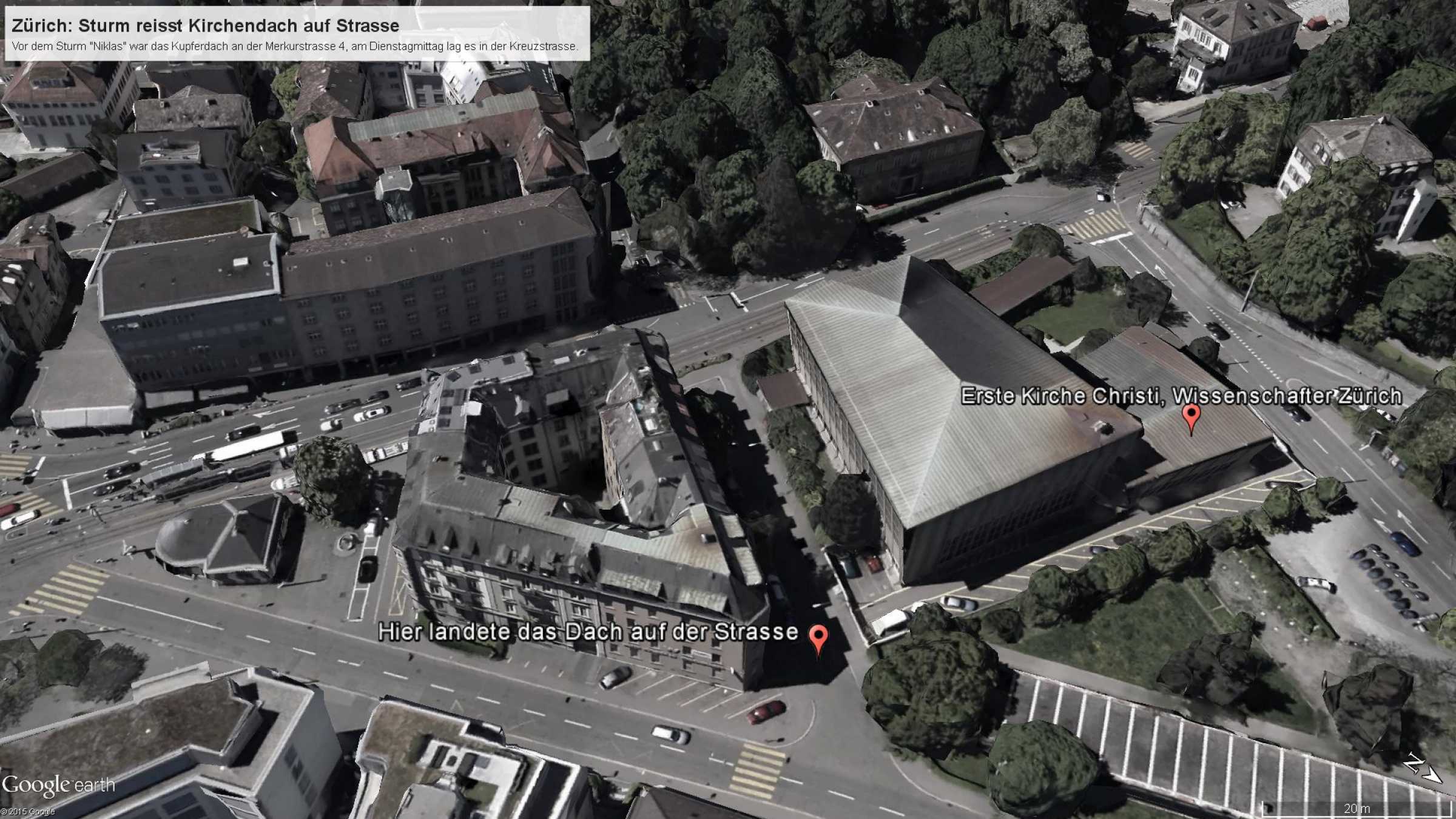
The violent storm "Niklas" tore half a roof onto the street at Merkurstrasse in Zurich on Tuesday.

The piece of the copper roof weighing several hundred kilograms. © PD Zurich City Police
Here the roof flew through the air. © PD Zurich City Police

Under the copper roof weighing several hundred kilograms, three cars were buried and heavily damaged, as the city police writes. In the opposite house, a balcony was partially torn down.

The Zurich city police received about 30 reports due to the storm until 1 pm. Most of them involved uprooted trees or fallen branches blocking roads and damaging parked cars. In addition, the police officers had to deal with fallen construction barriers, scaffolding, traffic signs and ships that had broken loose.

The storm also raged elsewhere in Switzerland, covering roofs, toppling trees and causing extensive damage to property. Various people were injured and had to be taken to hospital; in Andelfingen, one person lost his life as a result of the hurricane.

According to Meteo Switzerland, gusts of between 70 and 90 km/h were measured in the Central Plateau. The highest value of 120 km/h was recorded in Steckborn in Thurgau.


Safety charter welcomes 1000th member

With the construction company "Les Fils de Léon Sarrasin SA", the 1000th member signs SUVA's Safety Charter.

Representatives of Suva symbolically hand over an oversized copy of the Safety Charter to the construction company "Les Fils de Léon Sarrasin SA" in Martigny.

Every year, around 181,500 people insured by Suva have an accident at work. That is around 100 accident victims per working hour. With the launch of the Security Charter just under four years ago, the Suva together with the social partners, set itself the goal of reducing these figures. Now the construction company "Les Fils de Léon Sarrasin SA" in Martigny has signed the charter as the 1000th member and has committed itself to firmly anchoring the safety rules in the company.

Representatives of Suva symbolically presented the construction company in Martigny with an oversized copy of the charter and thanked the company for its commitment. "The Safety Charter is intended to help firmly anchor the acceptance and understanding of safety rules in companies. In addition, the charter is the legitimation for all those involved to say stop in the event of danger and to only continue working once safety has been restored," says André Meier, head of the occupational safety department at Suva. No job is so important that you risk your own health or that of your employees, Meier adds.

get_footer();