Alcohol involved - serious traffic accidents

Every tenth serious traffic accident is still caused by alcohol consumption. A campaign by the police and the Swiss Council for Accident Prevention (bfu) is raising public awareness of the issue.


Information campaign for new drivers: "Zero Promille. Zero problems"

When the legal limit for drinking and driving was lowered from 0.8 to 0.5 per mille in 2005, resistance was strong in some quarters. Ten years later, the change in the law and the possibility introduced at the same time to carry out police alcohol checks even without concrete suspicion have proven their worth, as the bfu writes. Over the past ten years, the number of fatalities and serious injuries in alcohol-related accidents has been reduced more significantly than in the rest of the accident statistics. This has also been accompanied by a change in social attitudes. People no longer regard drunk driving as a trivial offense, but recognize it for what it is: one of the greatest dangers to road safety. Alcohol is involved in around ten percent of serious traffic accidents, and in as many as one in two at night on weekends. Every 40th alcohol-related accident with injuries is fatal, emphasizes the bfu.

An important role in the social ostracism of drunk driving is played by the expectation of drivers that they can be checked by the police at any time. Here, too, much has changed in recent years: according to a bfu survey, in 2013 as many as 34% of those surveyed "sometimes", "often" or even "very often/always" expected to be stopped. This is a significant increase compared to only 15 percent in 2003. A survey by the Swiss Federal Statistical Office (FSO) shows that the percentage of drivers who were tested for alcohol at least once in a year rose from 2 percent in 2003 to 6 percent in 2011.

On the other hand, according to the bfu survey, the number of car drivers who can name the currently applicable alcohol limit is falling continuously. Whereas in 2005, the year the 0.5 per mille limit was introduced, 92 percent of those surveyed were still able to do so, in 2013 the figure was just 70 percent. This shows how important information and awareness-raising still are. In partnership with the police, the bfu is therefore reminding drivers of the dangers of driving under the influence of alcohol with its prevention campaign "Zero per mille. Zero problems" prevention campaign, the bfu reminds drivers of the dangers of drinking and driving.

As part of the road safety program "Via sicura" further measures to combat alcohol-related accidents were adopted. Some of these have already been in force for a year (e.g. alcohol ban for new drivers), others will come into force this year or next. For example, since the beginning of 2015, motor vehicle liability insurers are now obliged to take recourse against the person who caused the accident in the event of damage caused while drunk or unfit to drive, among other things.

Constant risk of accidents in snow sports

Skiing and snowboarding remain among the most popular sports in Switzerland. Contrary to assumptions to the contrary, these activities have not become more dangerous in recent years. This is the result of a new study by the bfu. However, an average of 87,000 snow sports enthusiasts are still injured on Swiss slopes every year.

On average, 6 skiers or snowboarders die each year on Swiss slopes, as well as 10 off-piste skiers or snowboarders off the marked slopes.

About 2.5 million inhabitants of Switzerland ski, 0.4 million prefer snowboarding. A Study of the bfu for the first time comprehensively analyzed the occurrence of accidents in snow sports on Swiss slopes. It shows that the number of skiing and snowboarding accidents has remained relatively stable since the mid-1990s. On average, around 39,000 skiers and 13,000 snowboarders resident in Switzerland were injured on Swiss slopes so seriously that they required medical treatment. In addition, there are 30,000 injured skiers and 5,000 injured snowboarders residing abroad. The risk and severity of injuries have hardly changed in the last 10 years.

On average, 6 skiers or snowboarders die each year on Swiss slopes and 10 off-piste skiers or snowboarders die off-piste. The risk of a fatal accident is one fatality per 1.4 million snow sports days. The evaluations of the bfu thus show: Contrary to assumptions to the contrary, skiing or snowboarding has not become "more dangerous" in recent years.

For skiers, the proportion of accidents due to collisions is only 7.4 %, for snowboarders even only 3.8 %. Evaluations by the bfu also indicate that on weekend days, when more snow sports enthusiasts are on the slopes, the risk of collision is no higher than during the week.

Strategic partnership between SeeTec AG and ICS Group

Business Video Intelligence: Many companies rely on video systems to secure their facilities and buildings. But video technology can do much more: It can be used, for example, to support business processes and thus generate added value.

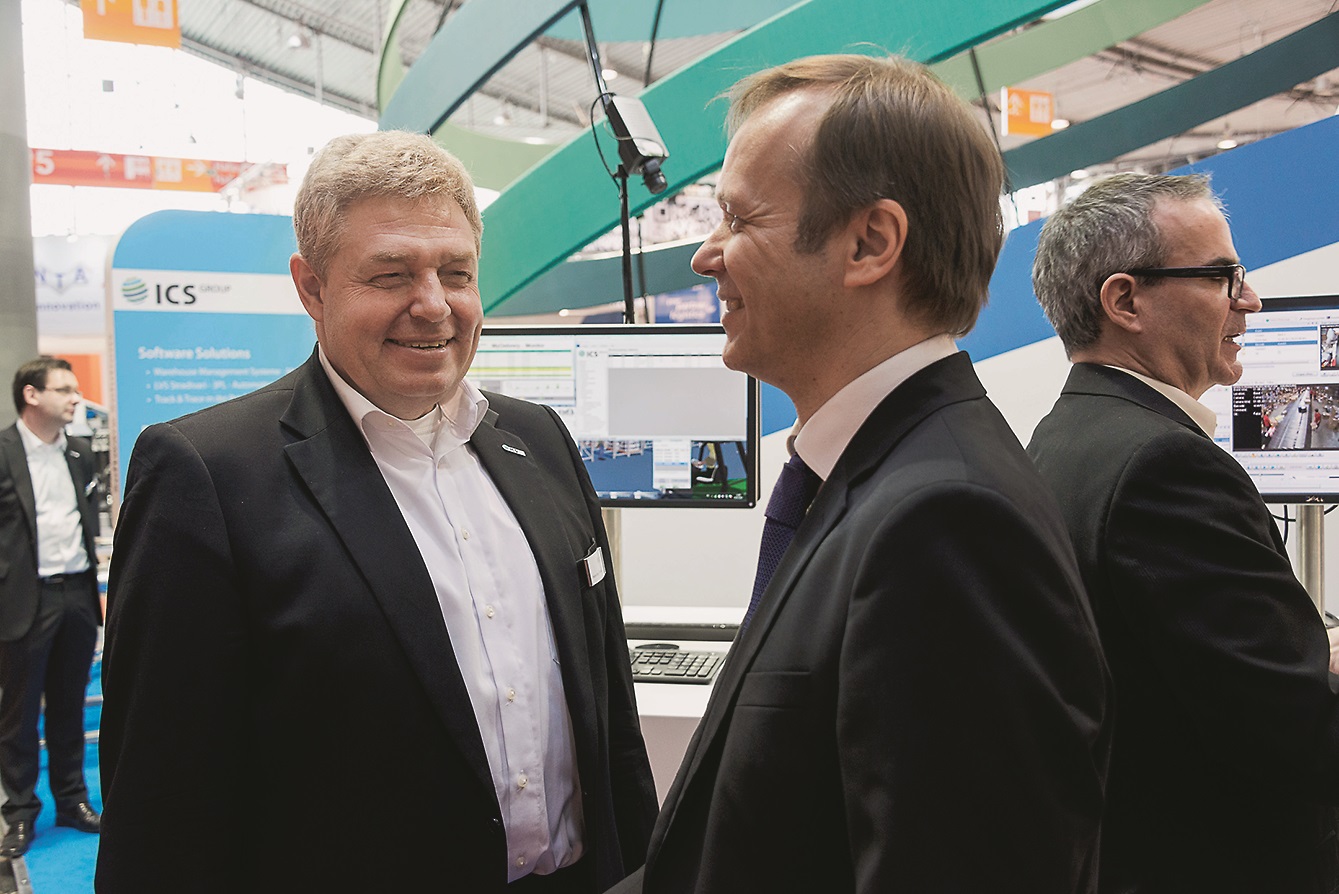
Hans-Jörg Tittlbach (CEO ICS Group) in conversation with Stephan Rasp (CEO SeeTec AG)

Under the catchword "Business Video Intelligence", or BVI for short, the SeeTec AG in Bruchsal, Baden-Württemberg, is developing solutions that combine image streams with process and booking data, thereby opening up new potential for value creation. In order to be able to actively place the BVI applications with customers, the ICS Group entered into a strategic partnership with SeeTec. The provider of video management software from Bruchsal has been offering solutions in Europe since 2000. One focus is software products in the security sector.

The first step of the cooperation between ICS and SeeTec could be seen by the visitors of the trade fair Logimat recently experience in Stuttgart, as communicated. At the trade fair, ICS presented the new version of SeeTec BVI Logistics for the first time. The solution combines video data with information about parcels or packages. Losses or damage can thus be visually traced and clarified within a very short time - saving time, costs and increasing customer satisfaction. Thanks to a flexible driver concept, SeeTec BVI Logistics can be connected to a wide range of enterprise resource planning and warehouse management systems.


Further training as "Project Manager Security Systems

The demands on security specialists are increasing as security and alarm systems become more sophisticated. This demands a lot of brains from those who plan the sophisticated security systems, put them into operation and are ultimately also responsible for their maintenance. The necessary tools are provided by the further education course "Project Manager Security Systems" - a diploma with a federal certificate.

The graduates of the SES continuing education

The course is offered in cooperation with the Association of Swiss Installers of Security Systems (SES) is offered. It can be completed either in the specialization "Fire" or "Security". The course is aimed at professionals with a technical specialization who work in a security technology installation company or who deal with security systems at a security planner or at an official or private acceptance body. Recently, SES was once again able to present 17 graduates with the federal diploma. They had not only increased their market value, but had also done something for character building, said association president Guido Portmann (Company Securiton). He also proudly pointed out that SES has now held its fifth course and trained the first 100 professionals.

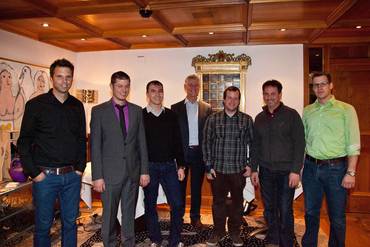
The diploma was received on January 20 in Lucerne: Markus Baumann, Marco Birrer *, David Blöchliger, Michael Caprani, Simon Gilgen *, Christoph Huhle, Thomas Krähenbühl*, Stefan Messerli, Reto Moser, Marco Profico *, Othmar Schäfli *, Pascal Steiner, Sascha Stieger *, Martin Stocker *, Pascal Stocker, Martin Wüest, Thom Young (*The graduates with top grades; see photo).

Additional funding for counterterrorism in Switzerland

The Federal Council today held a debate on the current situation regarding the terror threat posed by jihadists and obtained an overview of Switzerland's counter-terrorism disposition.

Federal Council approves additional funding for the fight against terrorism

There are still no indications of concrete threats and attack plans in Switzerland, according to a press release from the Federal Department of Justice and Police (FDJP). The security agencies would remain increasingly vigilant with regard to new indications. In order to selectively strengthen the preventive fight against terrorism, the Federal Council has decided to create six additional positions at the Federal Intelligence Service (FIS) for information gathering and processing, limited to three years, and to support the state protection agencies of the cantons with additional funds amounting to two million francs.

In Western Europe, there has basically been an increased terror threat since 2001, which has further increased in recent months. This is due to an increase in the number of jihadist-motivated travelers, combined with the increased number of returnees, but also to direct calls by jihadist groups to carry out attacks. In the wake of the generally heightened terror threat in Europe, the federal government already decided on additional measures in November and December 2014. These included the establishment of a task force to deal with cases of jihadist travelers and the banning of the groups "Al-Qaïda" and "Islamic State" by means of urgent federal legislation.

The threat to Switzerland remains elevated after the attacks in Paris, the FDJP said. In principle, an attack like the one in Paris cannot be ruled out in Switzerland. However, no concrete threats or attack plans have been identified for Switzerland.

The competent authorities have various means at their disposal in dealing with cases of suspected jihadists. In assessing the threat situation, the FIS relies on all kinds of intelligence sources. If the FIS detects a suspicion of a criminal act, it immediately forwards the information to the federal law enforcement authorities. In the area of early detection and combating jihadism on the Internet and in the task force for handling cases of jihadist-motivated travelers, there are special well-established channels for exchanging information and cooperation.

If a terrorist attack were to occur in Switzerland, the local cantonal police would take the first measures. There are defined structures and processes for coordination between the security authorities of the cantons and the federal government. These mechanisms of cooperation would be regularly reviewed and improved in real operations and in exercises. The lessons learned from attacks such as the one in Paris would also be taken into account.

With regard to the World Economic Forum WEF in Davos, the federal and cantonal security authorities examined whether to temporarily reintroduce checks on persons at the Schengen internal borders. According to the FDJP, however, no sufficiently concrete and serious threat to Switzerland's internal security in general and to the WEF in particular could be identified in the present case. The measures reinforced by the Border Guard Corps and the border control bodies of the Zurich and Bern cantonal police forces in the wake of recent events and in view of the WEF are sufficient for the current development of the security situation, according to the statement.

The detailed media release of the Federal Department of Justice and Police can be found at here.

Protection & Rescue Zurich: over 40,000 missions in 2014.

Last year, the rescue service and fire department of Zurich Protection & Rescue together carried out over 40,000 operations. The operations control center received over 133,000 calls from the affiliated cantons (tel. 144 and 118), as reported.

The fire department recorded over 4600 calls in the city of Zurich in 2014


The rescue service called out a total of 35,476 times in 2014, a slight increase on the previous year's figures (+3.4%). Around 74% of these calls took place in the city of Zurich (over 26,000). In 7% of all ambulance calls, an emergency physician was also called out. The number of emergency physician missions has increased in the city area, while they have tended to decrease in the rest of the region.

The fire department recorded over 4600 interventions (-2.3%) in the city of Zurich. The largest increase was registered in the area of "first responder" interventions with a total of 261 interventions (+97.7 %). In these emergency medical interventions, professional firefighters deploy for first aid or bring an emergency physician to the scene. The increased deployment of the "first responder" team has further improved rapid medical first aid, especially for resuscitations. The number of firefighters called out to deal with natural disasters (storms, water, etc.) and accidents in the city of Zurich fell by around a third (520).

The fire police of Schutz & Rettung work preventively and ensure that buildings in Zurich are fire-safe and have safe escape routes. Last year, the fire police carried out over 1200 building inspections. The fire protection experts also carried out a good 1,300 final inspections of new buildings or conversions.

The Schutz & Rettung operations control center handles fire department emergency calls (118) from all over the canton of Zurich as well as ambulance emergency calls (144) from the cantons of Schaffhausen, Schwyz, Zug (since 2.12.2014) and Zurich.

You can find more information on the Homepage of Protection & Rescue Zurich.

Hooligan statistics

The Hooliganism Section at the Federal Office of Police (fedpol) has figures for the current 2014/2015 football and ice hockey season. Since the end of July 2014, 158 new individuals have been recorded in the Hoogan information system. At the same time, 166 persons were deleted from the system. The total number of persons registered in "Hoogan" as of the end of January 2015 amounts to 1477 persons, fedpol has announced.

With the electronic information system Hoogan fedpol wants to keep violent and violent risk fans away from sports stadiums and their surroundings

fedpol has been operating the Hoogan electronic information system since August 2007. This system records data on individuals who have behaved violently at sporting events in Switzerland and abroad. In concrete terms, Hoogan can be used to record information about people who have been subject to exit restrictions, measures under cantonal law (zone bans, reporting requirements and police custody) or stadium bans. The aim of these measures is to keep violent and violent high-risk fans away from sports stadiums and their surroundings.

The competent police authorities in the cantons and cities impose bans, reporting requirements and police custody on individuals. Of the total 1477 persons registered, 13 are female, 74% are related to football, 26% are related to ice hockey. 48% of the registered person are between 19 and 24, 30% between 25 and 29, 14% between 30 and 39, 4% between 12 and 18, and 4% between 40 and 69 years old.

The currently most frequently committed offenses are violations of the Explosives Act (388 active measures, -18 compared to the last media release), breach of the peace (316 active measures, +17), violence and threats against authorities and officials (131 active measures, +10) as well as assault (73 active measures, -1) and damage to property (59 active measures, +3). For the first time, the offense of disguising oneself appears among the five most frequently committed offenses, with a total of 128 active measures. Furthermore, a total of 60 measures were imposed for obstructing an official act and 53 measures for simple bodily harm.

Currently, a total of 947 measures against violent persons are active to keep them away from sports stadiums and their surroundings. Active means in force at the moment. These include 624 stadium bans and 320 area bans.

In total, during the 2013/2014 football season (Super League, Challenge League and Swiss Cup), three reporting requirements, 179 rayon bans and 153 stadium bans were recorded in "Hoogan", and during the 2013/2014 ice hockey season (National League A and B), 57 rayon bans and 72 stadium bans were recorded. During the current football season 2014/2015 (Super League, Challenge League and Swiss Cup) 25 rayon bans and 30 stadium bans have been recorded in "Hoogan" so far, during the current ice hockey season 2014/2015 (National League A and B and Ice Hockey Cup) 31 rayon bans and 19 stadium bans.


Event tip: Industry meeting point SECURITY 2015

SICHERHEIT 2015 in Zurich has been launched. From November 10 to 13, it will once again be the most important meeting place for the Swiss security industry - this year for the 20th time.

Industry meeting point SECURITY 2015


At its 20th edition this coming November, the trade event will be SECURITY 2015 again present various premieres, new trends and developments. "The challenges are becoming more complex, the need for information is growing and the industry is becoming more dynamic. That's why we have always made sure to both maintain the existing and incorporate new elements and future-oriented topics. This will also be the case at the 20th anniversary edition," says Exhibition Director Heinz Salzgeber.

A central component of SICHERHEIT 2015 will again be the specialist congress. According to the announcement, an average of more than 1,000 participants will attend. Top-class speakers will offer a good mix of theoretical basics and practical implementation examples, which will be of great benefit for daily application, as the organizers let it be known. The division into half-day modules makes it possible to visit the exhibition and the congress on the same day and offers a wide range of topics.

Responsible for the conception and organization of the congress is the Save Inc. - a company of the galledia group - responsible. The detailed Program will be published in June 2015.

Today, companies and safety officers are required to include natural hazards in the planning and management of their properties and infrastructures. This demands not only the companies but also the authorities, insurances, intervention forces as well as every single person involved. As during the last exhibition, the special show "Risk Management of Natural Hazards" will network these stakeholders, provide expertise and experience, and inform on current topics from the field. In the open forum, hazard experts will comment on the most diverse aspects of this field. In addition, companies will present themselves and their products in the adjacent exhibition area. The special show can already count on the support of the most important associations in the industry. The planning and implementation of the special show is once again in the hands of the company Egli Engineering AG.

Various associations and organizations recognize the trade congress as a training unit. The trade fair also enjoys the support of the most important trade associations and industry leaders: The SES (Association of Swiss Installers of Security Systems), VSSB (Association of Swiss Lock and Fittings Manufacturers), swiss safety (Association of Swiss PPE Suppliers) as well as the SSI (Swiss Association of Independent Safety Engineers and Consultants) carry and supported the upcoming trade event.

You can find more information about the event here.


"The security industry must be able to respond ever more quickly to technological advances and changing social conditions. "Heinz Salzgeber, Exhibition Director

Event tip: 59th Real Estate Talks on the subject of surveillance and security

The topic of security has gained massively in importance in recent years. In the real estate environment, access controls and monitoring of physical facilities are relevant on the one hand, but on the other hand, increasing importance is being attached to the safety of users, for example in the event of fire or earthquake. Today, completely new threats also come from the Internet, with the possibility of taking control of control systems.

59. real estate talks

In the real estate environment, the following questions arise:

  • How can security-related issues be identified and addressed?
  • Which precautionary and avoidance strategies are important and useful in a specific case?
  • What are the possibilities in building monitoring today?
  • What limits does the legislation set regarding liability and data use?
  • What threats come from the Internet?
  • What preventive measures are possible?

Moderated the "59. real estate talks" from Markus Schmidiger, Director of Studies Real Estate Management, Lucerne University of Applied Sciences and Arts.

The event will be held on April 23, 2015 (from 5:30 pm) at the restaurant Metropol will be held in Zurich. It is organized by the team of the professional journal "Real Estate Business" together with that of the "Security Forum".

Strategic partnership between SeeTec AG and ICS Group

Business Video Intelligence: Many companies rely on video systems to secure their facilities and buildings. But video technology can do much more: It can be used, for example, to support business processes and thus generate added value.

Hans-Jörg Tittlbach (CEO ICS Group) in conversation with Stephan Rasp (CEO SeeTec AG)

Under the catchword "Business Video Intelligence", or BVI for short, the SeeTec AG in Bruchsal, Baden-Württemberg, is developing solutions that combine image streams with process and booking data, thereby opening up new potential for value creation. In order to be able to actively place the BVI applications with customers, the ICS Group entered into a strategic partnership with SeeTec. The provider of video management software from Bruchsal has been offering solutions in Europe since 2000. One focus is software products in the security sector.

The first step of the cooperation between ICS and SeeTec could be seen by the visitors of the trade fair Logimat recently experience in Stuttgart, as communicated. At the trade fair, ICS presented the new version of SeeTec BVI Logistics for the first time. The solution combines video data with information about parcels or packages. Losses or damage can thus be visually traced and clarified within a very short time - saving time, costs and increasing customer satisfaction. Thanks to a flexible driver concept, SeeTec BVI Logistics can be connected to a wide range of enterprise resource planning and warehouse management systems.


Virtual bank heist: One billion US dollars stolen

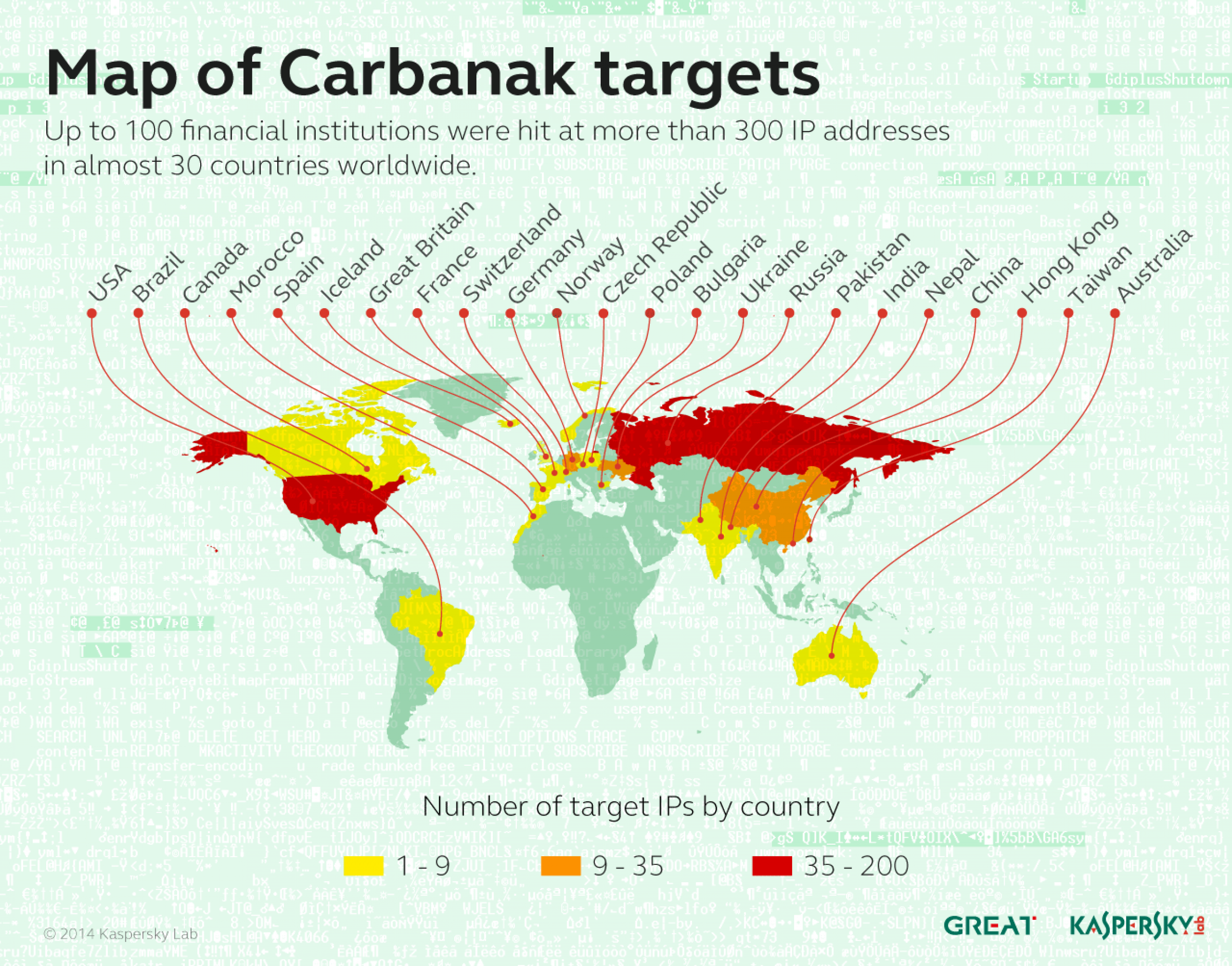
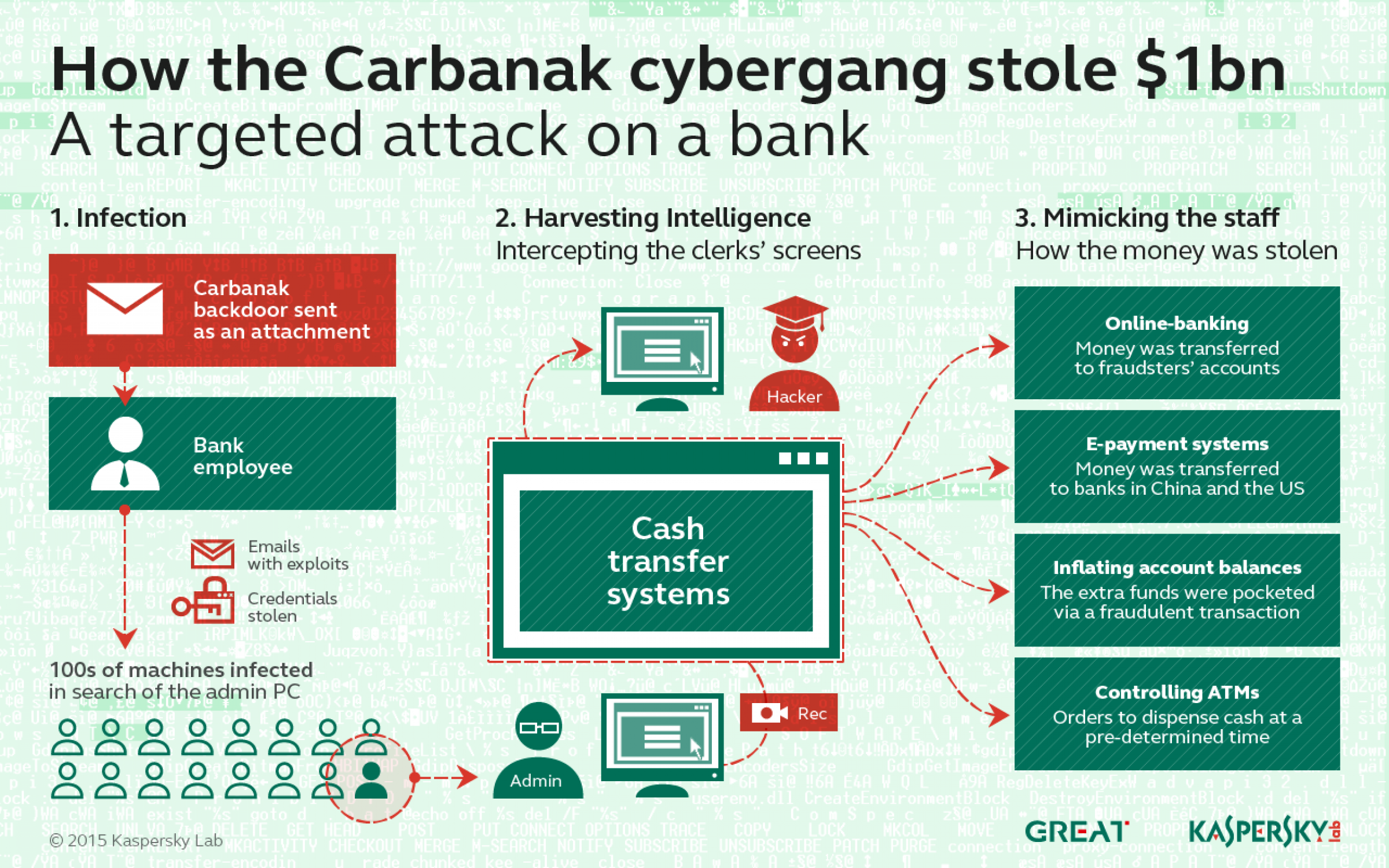
The cyber gang "Carbanak" knows how to do it and relieves financial institutions of several million US dollars in a virtual bank heist.

Knows the trends in ICT security: Umberto Annino from InfoGuard.

The objectives and the implementation of the Carbanak attacks

Interpol, Europol and institutions of various countries as well as Kaspersky Lab have jointly uncovered the story of an unprecedented cyber bank heist. According to the experts, an international gang of cyber criminals from Russia, Ukraine, parts of Europe as well as China is responsible for the heist.Not only the financial world is affected by such "heists", but also every SME needs to protect its assets. But how?

In the print edition of the SecurityForum in March, the expert highlights the latest trends in ICT security and answers questions about the current threat situation in the cyber world. Umberto Annino also outlines a systematic approach to security strategy in SMEs.

Here you can find the detailed technical report (English) from Kaspersky Lab.

"However, it is still very difficult for many companies to find the right balance in the security system, and so the three levels of technology, processes and people are very often given unequal consideration. Then people like to rely on the panacea 'security tool': They buy a product because the manufacturer has advertised it well. But it is not until integration that you realize that the configuration is time-consuming and complex - and the tool fails to serve its purpose" - Umberto Annino from InfoGuard.

Occupational health management for every age

Demographic change is presenting the Swiss economy with growing challenges. While the number of older employees is constantly increasing, the number of younger employees is constantly decreasing. Health in the workplace is becoming increasingly important from this point of view.

Health in the workplace is gaining in importance under the aspect of demographic change

It is important to focus on the different requirements and needs of employees from very different generations. At the same time, a corporate framework must be created that enables health management to function within the company.

Findings on the The state of generation management in Switzerland provides the study of the same name by Health Promotion Switzerland. This was presented and discussed for the first time at the national conference for workplace health promotion at the University of Fribourg. Under the direction of Prof. Dr. Martina Zölch, Head of the Institute for Human Resource Management and Organization at the University of Applied Sciences FHNW in Olten, the study investigated which measures Swiss companies are taking to cope with the changes in age structures. The study explored the challenges that demographic change poses to corporate health management, human resources and leadership. The study bridges the gap between demographic management and corporate health management. In this way, Swiss companies receive concrete indications for the implementation of workplace health promotion at all ages.

get_footer();