Graphene is a single carbon layer the thickness of an atom. This layer, which is only a few nanometers thick, can only be seen under a scanning tunneling microscope and contains the technology of tomorrow.
Editorial - March 11, 2015
Graphene is suitable as a material for heat protection linings
The material is multifunctional: super-thin and therefore transparent, extremely conductive to electricity and heat, more tensile than steel, yet flexible and abrasion-resistant and impermeable to gases.
A research group of the Hohenstein Institute wants to use the material in future for heat protection clothing. Surface modification with graphene can significantly improve the textile's properties in terms of flame resistance.
Graphene can act as a physical barrier that effectively prevents the penetration of heat and gases. At the same time, graphene can potentially prevent thermal decomposition of the textile. Another advantage of graphene is that it is approximately 200 times more resistant to fracture and abrasion than steel. These capabilities also make graphene highly interesting for applications in the field of protective equipment.
National strategy for the containment of antibiotic resistance
The increase in antibiotic resistance poses major challenges to public health. Federal Councillors Alain Berset and Johann Schneider-Ammann have therefore had a national strategy against antibiotic resistance drawn up. The primary goal is to maintain the effectiveness of antibiotics for humans and animals in the long term. Stakeholders were involved in the drafting process; the draft strategy is now going out to consultation.
Editorial - March 9, 2015
Excessive and sometimes improper use has led to more and more bacteria becoming resistant to antibiotics.
The development of antibiotics is one of the most significant advances in medicine. Thanks to these drugs, it is possible to cure dangerous diseases such as pneumonia or blood poisoning, which were often fatal in the past. However, the excessive and sometimes improper use of antibiotics has led to more and more bacteria becoming resistant to them. The increase in resistance to important antibiotic groups and the rise in multi-resistant germs are particularly worrying.
The problem of increasing antibiotic resistance affects human medicine as well as veterinary medicine and agriculture and can only be solved jointly and across all sectors. The Federal Council has therefore included the fight against resistance in the health policy priorities of the "Health 2020" recorded.
On behalf of Federal Councillor Alain Berset and Federal Councillor Johann Schneider-Ammann, the three Federal Offices of Public Health FOPH, Food Safety and Veterinary Office FSVO and Agriculture FOAG, with the participation of the Federal Office for the Environment FOEN, have drawn up a broad-based national strategy. The draft strategy shows in detail where action is needed, which goals are to be achieved and which key measures are necessary.
A central measure is the interdisciplinary monitoring of the resistance situation and antibiotic consumption in human medicine, veterinary medicine, agriculture and the environment. To this end, existing gaps are to be closed and the monitoring results published in a joint report.
To maintain the effectiveness of antibiotics in the longer term, prevention should be improved. The more infectious diseases are prevented, the fewer antibiotics need to be used for therapy. Infections can be prevented, for example, through the consistent implementation of hygiene measures in hospitals and in the care sector or with optimized animal husbandry in the agricultural sector.
It should also be avoided that antibiotics are used inappropriately. For example, respiratory tract infections are often primarily viral in nature, yet antibiotics are used without necessity. In order to reduce the inappropriate use of these drugs, new diagnostic methods should be developed to help distinguish quickly and clearly between bacterial and viral diseases. In addition, binding guidelines on the prescription, dispensing and use of antibiotics should help to reduce the consumption of antibiotics.
Another central element of the antibiotic resistance strategy is the increased sensitization and further training of experts and the provision of information to the general public. The aim is to provide comprehensible and transparent information about the effects of antibiotics and their correct use.
The containment of antibiotic resistance requires the commitment of all stakeholders. The most important actors and interest groups (cantons, professional societies, expert groups, industry, sectors and associations, etc.) were therefore involved in the development of the strategy from the outset. They will later assume an important role in the implementation of the strategy.
The Federal Department of Home Affairs FDHA and the Federal Department of Economic Affairs, Education and Research EAER are sending the draft strategy to the cantons and interested parties for comment by March 15, 2015.
High risk of injury in football
It happens quickly: A torn muscle fiber, a pulled muscle or torn ligaments. Every year, 45,000 accidents occur while playing soccer, more than in any other sport. To reduce this number, Suva launched an online tool in March 2014 that allows every player to determine and reduce their own risk of injury. Since then, around 14,000 people have completed the football test.
Editorial - March 8, 2015
There are 45,000 accidents every year while playing football
"This exceeds our expectations and proves that the test is well received by footballers," says Philippe Gassmann, campaign manager football at Suva.
An evaluation shows that 77 % of all participants have an increased risk of injury. There is a need to catch up especially in the area of training. Although 85 % of soccer players always warm up, they rarely do preventive exercises during training. Many also pay too little attention to sufficient rest between training sessions.
The Swiss Football Association (SFV) is also aware that coaches have an extremely important role in accident prevention. It is therefore integrating Suva's football test into coach education and training for the first time. Each coach receives a football test package that includes instructions, score cards for the players and a competition card. Among other things, the coach learns how to make the most of the football test and lead his team to success.
All information about the new football test package for coaches is available for the Download ready. Anyone who completes the football test with their entire team can take part in a competition. The main prize is a team visit as VIP guests at the Swiss Cup Final.
Especially in the areas of training and fitness, coaches can make a big contribution to accident prevention" - Philippe Gassmann, Campaign Manager Football at Suva.
Abraxas with new branch office in Bern
Abraxas Informatik AG in St.Gallen is newly represented with a branch office in Bern as of March 23.
Editorial - March 4, 2015
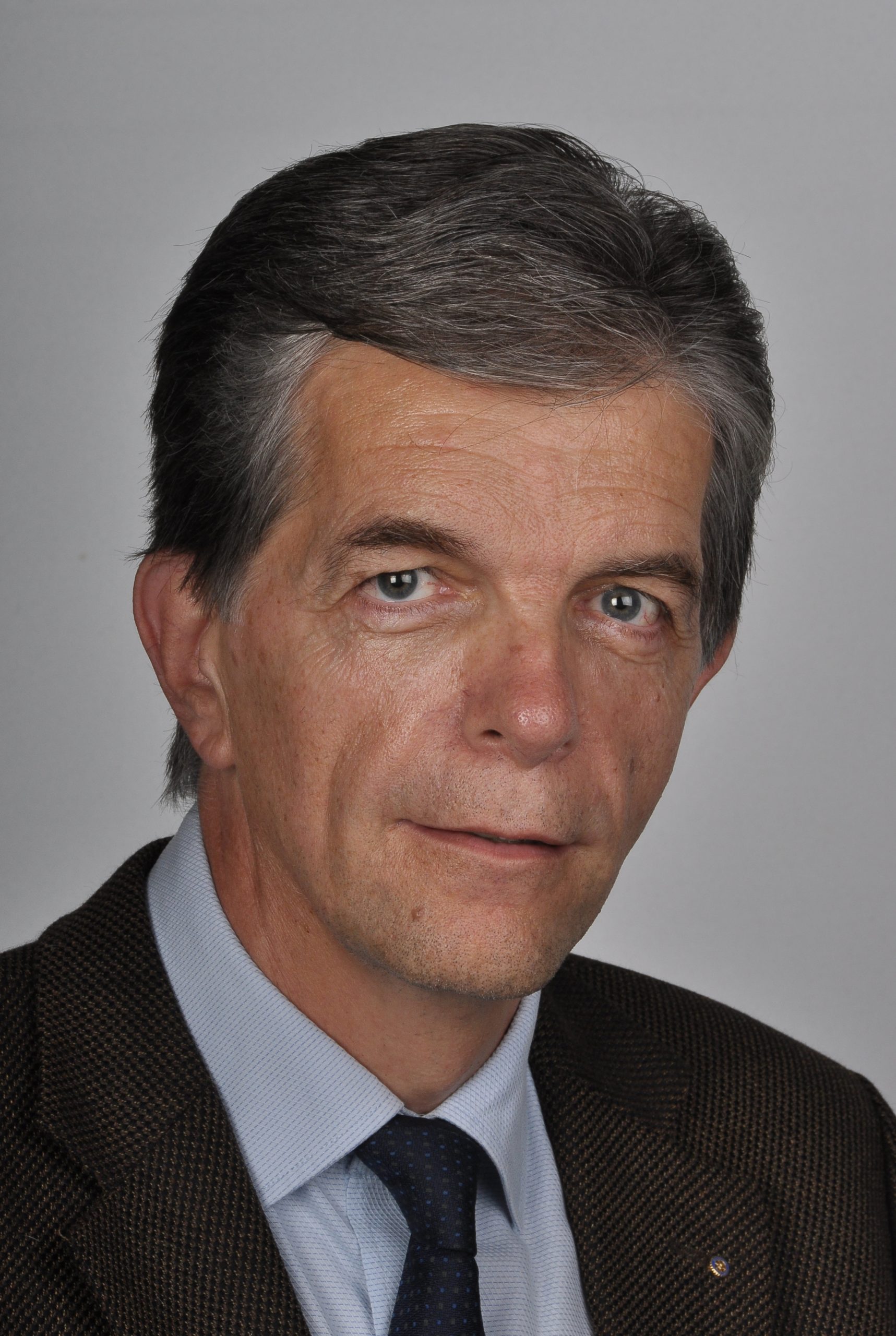
Stefan F. Rudolf, Branch Manager of Abraxas in Bern.
The office at Spitalgasse 9 is just a stone's throw from the Federal Palace and the train station. From there, the branch manager, Stefan F. Rudolf (1964), and his team will serve the federal government, federal-related organizations, the surrounding cantons and other public-sector clients, according to the company. With projects for the public sector is Abraxas has already been active in the federal city for several years. Now the relationship with the federal government is to be further deepened and new customers are to be acquired in the environment close to the federal government and in the surrounding cantons, according to the IT provider.
The IT specialist Stefan F. Rudolf has two children, lives in Niederwangen near Köniz BE, and is involved in regional politics. He studied electrical engineering with a focus on mathematics and computer science and holds a business MBA.
ABUS Switzerland is opened
Trigress Security AG became ABUS Schweiz AG at the beginning of the year. The internationally active ABUS Group is thus also pursuing the path of holistic security from a single source in this country. The company demonstrated what this means at its newly opened location in Baar (ZG) on February 20, 2015.
Editorial - March 4, 2015
With the ABUS branch in Zug, the Swiss security trade should benefit from clearer sales structures, shorter distances and a central business partner.
The personal presence in Switzerland is important because the security market here has different needs than, for example, in Germany or elsewhere, according to industry insiders and ABUS-managing director Christian Maag. Thanks to the new location, the security provider can optimize on-site customer service with its "Made in Germany" products.
The supplier's systems follow an integrated security concept: mechanics, electronics, alarm and video surveillance are combined into holistic solutions, as emphasized.
With the ABUS branch in Zug, the Swiss security trade benefits from clearer sales structures, shorter distances and a central business partner. These are just a few points that will simplify the partnership cooperation. Also the direct service thanks to an enlarged indoor and field service team, the competent support in marketing activities and the support for a professional PoS appearance are now from one source. All this helps the Swiss ABUS partner to operate successfully in the market.
The Group has been offering security technology since 1924. The manufacturer has its own research centers in Germany and develops networkable security solutions - from security devices for windows, doors, bicycles and motorcycles to locking systems, alarm and video surveillance systems and hazard detectors.
"We want to make life a bit safer, at home, on the road and in the property. In the future, we will cover all sectors." - Christian Maag, Managing Director at ABUS Security-Center.
Fire protection: New possibilities
The new VKF fire protection guidelines came into force at the beginning of the year. A new set of rules is now available, which brings relief in almost all points compared to the previous version. It is clear that the current protection targets of around four fatalities per million inhabitants per year must be maintained.
Editorial - March 4, 2015
The new fire protection guidelines have been in force since the beginning of the year
Conceptually, with the new fire protection guidelines 80 to 90 percent of all fire protection projects can still be covered according to standard. For the rest, the demands on planning have risen sharply. Therefore, in the future, clean planning will have an even higher priority in the overall implementation of fire protection measures. Quality assurance in fire protection will also become more important; the specially written fire protection guideline "Quality Assurance" confirms this.
The Save meeting on March 24, 2015, will focus on quality assurance, planning and the technical implementation of fire protection projects. Among others, experienced planners from the ranks of SSI (Swiss Association of Independent Safety Engineers and Consultants) will give presentations to address conceptual fire protection work and the new possibilities offered by the adapted VKF guidelines. Installers will also be on site to present the state of the art of fire alarm systems and sprinkler systems.
Lock and hardware factory taken over
Assa Abloy in Albstadt, Germany, has signed an agreement to acquire MSL Schloss- und Beschlägefabrik AG.
Editorial - March 4, 2015
Xaver Allemann, Delegate of the Board of Directors MSL, sees the acquisition as an opportunity
The Swiss provider, headquartered in Kleinlützel near Basel, has over 100 employees. With the acquisition, Assa Abloy strengthens its position as a leading provider of locking solutions and security systems around the door, it says.
"With the acquisition of MSL, the internationally active group gains size in Switzerland as well as in the DACH region and closes a gap in its own portfolio," says Stefan Fischbach of Assa Abloy.
MSL will continue to operate as an independent business unit under the existing management team and employees. As a result, the takeover will have no negative impact on existing employees and the site in Kleinlützel (SO) will remain unchanged.
The transaction is expected to be completed in the 2nd quarter of 2015. Further information can be found on the homepage of MSL Lock and Fittings Factory Ltd. or from Assa Abloy
"There are already great similarities between MSL and Assa Abloy. By becoming part of the Group, we have the opportunity to leverage the strengths of both companies and serve our customers even better" - Xaver Allemann
Decrease in telecommunications monitoring
In 2014, the Swiss law enforcement authorities ordered around 10% fewer surveillance measures with the Postal and Telecommunications Traffic Surveillance Service (Dienst Überwachung Post- und Fernmeldeverkehr, ÜPF) than in the previous year. In total, there were 9679 surveillance measures, as reported by the Federal Department of Justice and Police (FDJP).
Editorial - March 3, 2015
About 40% of the surveillance measures are ordered for serious violations of the Narcotics Law.
Both the real-time surveillance measures ordered by the law enforcement authorities at the ÜPF service (eavesdropping on telephone calls or reading e-mails) and the retroactive surveillance measures (proof of connection) have decreased. In 2014, 3,344 real-time surveillance measures were ordered (2013: 3,770) and 6,335 retroactive ones (2013: 6,872). It should be noted that one person is often subject to several surveillance measures, for example if he or she uses several telephones.
Decrease in detailed information, more phone book queries: In 2014, the law enforcement authorities also obtained less information from the ÜPF service overall. Technical-administrative information (detailed information on telecommunications lines, subscriber identifications) decreased by around 9% to 4,478. Simple information (telephone directory inquiries, IP address inquiries), on the other hand, was requested somewhat more frequently. They increased by just under 4% to 198,019.
Drug trafficking and property crimes: Around 40% of these surveillance measures were ordered by law enforcement agencies to clear up serious violations of the Narcotics Act. One third relates to serious property offenses. The remainder is divided among various types of offenses, including serious violent and sexual offenses.
Fewer fees and compensation: For the measures, the prosecution authorities paid a total of CHF 13.63 million in fees, around 8% less than in the previous year. The postal and telecommunications service providers were paid compensation amounting to CHF 10.13 million (around 2% more than in 2013). It should be noted here that the statistics list those surveillances which were ordered in 2014, as the FDJP writes. However, the fees are not paid until the surveillance measure is completed, i.e. in some cases not until 2015.
The published on the website of the service ÜPF. Statistics lists in detail all surveillance measures ordered and information provided by the law enforcement authorities in 2014.
New fire safety regulations
The totally revised Swiss Fire Protection Regulations (BSV 2015) have been in force since January 1, 2015. The previous regulations (BSV 2003), which were binding throughout Switzerland, have been completely revised since 2010.
Editorial - March 3, 2015
Fire safety regulations apply to all buildings and facilities
The objectives of the revision were careful, economic optimization while maintaining the safety level with regard to personal protection and adaptation to the current state of the art.
As before, the fire protection regulations apply to all buildings and facilities - from single-family homes to infrastructure buildings costing billions. However, the requirements differ greatly depending on the use and building geometry. Existing buildings must be adapted proportionately in the case of conversion and renovation.
The 2015 BSV are aimed at all owners and users, but also at all other persons involved in planning, construction, operation or maintenance.
In detail the new regulations available on the website of the Association of Cantonal Fire Insurers.
The new regulations are also available as printable version can be found on the website of Gebäudeversicherung Kanton Zürich.
SMEs targeted by cyber attacks
In the past few days, the Reporting and Analysis Centre for Information Assurance Melani has received an increasing number of reports from Swiss SMEs who have received suspicious spam e-mails. The reported e-mails apparently originated from alleged business partners and attempted to infect the recipient of the e-mail with an e-banking Trojan, as reported by Melani. In a recently reported case, which concerned a company in Fribourg, a seven-digit amount was stolen using the same Trojan.
Editorial - March 2, 2015
Increasingly frequent target of cyber attacks: Swiss SMEs
In many cases, this is an alleged fax message sent by e-mail. A common subject of such emails is "Fax message has been received" with a file attachment named "FAX_XXXXXXXXXXXX.zip", where X stands for any number. These emails were not sent via spam botnets, as is usually the case, but were actually sent via the sender's account. The malware contained in the zip file steals the victim's address book and then sends itself to the recipients contained therein, such as Melani further emphasized. Since the senders of these e-mails are not fake and, moreover, in many cases are actually business partners of the addressees, there is an increased risk that the latter will open the attachment and become infected with malware.
Melani writes that attackers are increasingly targeting SMEs. This is favored by the fact that many SMEs are insufficiently protected against threats from cyberspace. The problem does not necessarily lie with the SMEs, but often also with the IT service providers commissioned, who in some cases neglect IT security to a great extent. This is exacerbated by the fact that the responsibilities between customer and provider are insufficiently regulated.
Current situation of IT security in companies
90 percent of corporate security managers are confident in their security measures. This seems to run deep, as only 60% said they regularly update their systems, and only 10% of Internet Explorer users use the latest version. This is shown by Cisco's "Annual Security Report 2015", as the company writes.
Editorial - March 2, 2015
Companies are constantly affected by malware
The new report examined both cybersecurity trends and the current situation of IT security in companies. Not only were security executives (CISOs) from 1700 companies in nine countries surveyed, but data from 70 companies and more than 800,000 users and hosts worldwide were analyzed. According to the survey, three out of four CISOs think their security tools are very or extremely effective. However, less than half of security managers worldwide use standard tools such as patching and configuration management to keep applications and systems up to date. For example, despite the well-known Heartbleed vulnerability, 56% of all installed OpenSSL versions are still more than four years old.
Companies are constantly affected by malware. The malware tries to remain undetected on the affected host in order to be able to read data in the long term. This is apparently one reason why IT security teams feel much safer than they actually are, as Cisco emphasizes.
You can download the detailed original report here request via Cisco.
Simulate hacker attacks and promote security culture
Who wouldn't want to test whether their own employees are familiar with the dangers on the Internet? A group of security specialists has developed a corresponding application called "Lucy" that is able to simulate realistic hacker attacks.
Editorial - March 2, 2015
Hack your own company with "Lucy".
Once installed, the application allows the administrator to launch parallel attacks without the need for in-depth hacking knowledge. With a few clicks, one can copy web pages on the Internet or select templates of different attack methods. The technical aspects, such as sending "lockmails", starting the web server with embedded spy software, statistical analysis up to the creation of functional test Trojans, are taken care of by "Lucy", as it is called.
Only if you know how sensitized your employees are can you close any gaps in their knowledge. "Lucy" was therefore also equipped with an e-learning module.
The use of "Lucy" only makes sense if the application is used as part of a comprehensive campaign to promote safety culture, the initiators let it be known.
You can find more information on the Homepage of the provider.