Do you understand me?

The first sign of hearing loss is often a loss of understanding. This affects many people in Switzerland.


Many hear conversations normally out loud, but have trouble understanding.

Around 12 % of the Swiss population have, according to a survey by Pro Audito Switzerland problems with their hearing. Many of them still hear well, but do not understand everything. This condition is called loss of understanding and occurs in about 85 % of all hearing losses. Worldwide, as many as 590 million people live with hearing loss, over 40 % of them between the ages of 60 and 69. Projections show that the number of people with hearing loss could even double by 2050.

The "Day of Hearing" on May 13 therefore draws attention to the importance of good hearing and raises awareness in society for optimizing one's own sense of hearing. On the occasion of this day of action, the hearing specialist Amplifon is conducting the Swiss hearing test by.

Anyone who has trouble understanding everything from time to time can take a free hearing test at all Swiss Amplifon stores between the beginning of May and the end of July. This will determine whether there is a loss of understanding due to hearing loss.

A modern hearing aid can compensate for this type of hearing loss. The fact that the quality of life of people with hearing impairments is significantly improved by the use of a hearing aid has been proven by the acoustics specialists Amplifon and Phonak in two national hearing studies.

Chemical products: New hazard symbols apply from June

As of June 2015, Switzerland will switch to the new hazard symbols.

The new GHS hazard symbols are now also finally coming into force in Switzerland.

The new GHS hazard symbols will soon also come into force in Switzerland. This means that the international system for hazard assessment and labeling of chemical products will also apply here. The worldwide harmonization of the symbols is intended to provide better protection, but also to simplify the trade in chemical products.


Attention dangerous goods day

In June, the Dangerous Goods Switzerland will take place in Basel.

Transportation of dangerous goods

On June 10, 2015, the 17th Dangerous Goods Day Switzerland will take place at the Swiss Conference Center in Basel. The focus is on the future of dangerous goods transport. The current status of future telematics applications in connection with the transport of dangerous goods will be addressed.

As always, participants can put together their own personal program at this traditional event. There is a choice of two hazardous goods courses and specialist modules on the following topics

  • Loading/unloading and handling
  • Implementation of the innovations 2015
  • Lithium batteries and the innovations of the IMDG Code

By the way, the conference participation is considered as proof of further training according to chapter 1.3 RID/ADR and is recognized as SGAS further training event.

The event is organized by Swiss TS and GeFaSuisse.

Little trust in overworked physicians

The public loses confidence in physicians when they exceed the maximum allowable working hours.

Overworked doctors lose the trust of their patients.

A Study commissioned by the Association of Swiss Assistant and Senior Physicians (VSAO) shows that the population loses confidence in physicians when they work more than twelve hours a day.

The fact that the working hours of residents and senior physicians are often exceeded is no secretOn average, doctors work more than 56 hours per week - that is 6.5 hours more than the legally permitted maximum of 50 hours. Every fourth doctor even works over 60 hours per week.

77% of those surveyed then also see their trust in the quality of treatment at risk if the doctor has already been working for 12 hours - and rightly so: over a third of doctors have personally experienced a patient's health being put at risk because of overtiredness on the part of the medical staff.

For some time now, the VSAO has been demanding that the labor law also be observed by assistant and senior physicians.

Implenia hacked

In the night from Thursday, the Implenia website has become the target of a hacker attack.

implenia-hacked-it-security

According to the construction company, the hackers had gained access to the website and placed messages on it that were directed against Scientology. Who exactly is behind the attack is not yet clear, as the company writes.

Implenia condemns the criminal action of the authors and has filed charges against unknown persons. The motive for the attack is related to the recently completed renovation work for the Scientology headquarters in Basel, it says. Finally, the construction group writes in the media release that it has no relations with the sect.


About 50% of the companies are digital dinosaurs

A study concludes that more than half of the companies in Switzerland lack digital know-how. At the same time, 74% of the companies attribute a major impact of digitalization on their industry. And that can be critical for success.

over-50-of-the-companies-are-digital-dinosaurs-it-security

over-50-of-the-companies-are-digital-dinosaurs1-it-security

"Swiss companies still seem to lack digital know-how at both management and employee level," says Sven Ruoss, head of the CAS Social Media Management study at HWZ, summarizing the results of his study. "This is despite the fact that 74% of the companies surveyed assume that digitization will have a large to very large impact on their industry." For half of the Swiss companies, this will be critical to their success by 2017.

Swiss companies are challenged by the digital transformation mainly due to limitations in the IT system, a lack of financial resources and a lack of know-how at the management level. "A rethink is urgently needed, as no industry can escape digital development. A sensible use of digital possibilities can significantly increase customer loyalty and usually leads to an increase in efficiency in all areas," holds Manuel P. Nappo, Head of the Center for Digital Business at the HWZ. The study identifies "digital security" and the areas of "mobile," "big data," "social media" and "cloud computing" as groundbreaking technologies. Product and service enhancements, an improved customer experience and increased productivity are listed as the most important motivations for companies to undertake the digital transformation.

463 people participated in the survey. Of these, 77% were male, 23% female. 62% of the respondents are in management, 33% have no management function and 5% are self-employed.

More on the topic of digital transformation in Switzerland here.

Rail suicide: exonerate train drivers

If a suicidal person throws himself in front of a train, the train drivers affected often suffer for the rest of their lives. SBB now wants to strengthen prevention.

When a train driver has witnessed a suicide, it means a heavy psychological burden. (Image: © SBB CFF FFS)

Rail suicides often take a heavy toll on the mental health of the train drivers involved. And these are not exactly rare: 140 people died in such an incident last year, and a further 90 survived the attempt - albeit often seriously injured. Some of the SBB employees who have had to witness this have to give up their jobs altogether, while others struggle with anxiety on every journey afterwards.

But it is not only the train drivers who are affected - in addition to the human suffering that a rail suicide causes for the victims, relatives, customers and employees, they also have a major impact on rail traffic.

How the SBB is involved in a Communiqué it wants to actively engage in prevention due to the development of rail suicides and social responsibility. The focus is on communication, raising employee awareness and examining further measures in the structural and technical area. At a national conference today, SBB worked closely with experts, the Federal Office of Public Health and other institutions to provide information on the subject of rail suicide, prevention and how best to deal with it.

Dyre Trojan spreads like an avalanche

The e-banking Trojan "Dyre", which targets SMEs, is spreading like an avalanche. In recent weeks, several hundred new infections have been reported daily to MELANI in Switzerland. In the meantime, private users are also increasingly affected.

Reported Dyre infections in Switzerland in the last 90 days.

Among other things, the following perfidious method is used to spread this Trojan: If a computer of a company or a private person is infected with this malware, first all e-mail addresses are read from the mail program and then the malware is sent to all contacts under their identity. The e-mail thus reaches the entire customer base of a company or the circle of acquaintances of a private individual. Since the sender of the e-mail is known and trusted by the recipient, there is a great risk that recipients will open the attachment, become infected and subsequently endanger their own customers or acquaintances.

Due to the acute threat posed by "Dyre," the February 2015 warning remains unchanged, MELANI writes. MELANI again reminds Internet users not to open any suspicious e-mail attachments. The malware disguises itself as a fax message, fictitious order, delivery, invoice or payment, among other things.

In addition to the usual rules of conduct, the reporting office recommends:

  • Be careful when dealing with e-mails, even if they appear to come from trustworthy senders. If in doubt, check with the sender of the email by phone before opening an attachment.
  • If you have already received suspicious emails and opened the file attachment, we recommend that you scan your system with a virus scanner or a malware removal tool. You can find instructions on how to do this at this link
  • If, when logging into e-Banking after entering the login information (password, mTAN/token), you receive a lock screen, e.g. "e-Banking is currently unavailable", contact your bank immediately.
  • If other unusual occurrences occur during the login process (e.g. minute timer display, etc.), the bank should also be contacted.
  • Make sure that you have an up-to-date antivirus program installed on your computer and scan your computer with it regularly (full system scan).
  • Consult the MELANI fact sheet IT Security for SMEs and the 10-point program to increase IT security on the federal SME portal: Security measures for the IT infrastructure SMEs

Partnership agreed

HID Global and SwissSign, a subsidiary of Swiss Post, enter into a partnership for the DACH region.

partnership-agreed-it-security

Digital certificates are playing an increasingly important role in the implementation of high IT security. More and more companies are implementing their own public key infrastructure (PKI) to support secure two-factor authentication or the encryption of business-critical data, such as HID Global writes. However, if certificates are to be applicable beyond company boundaries (e.g., exchange of encrypted e-mails, digital signing), a local PKI would be overwhelmed by this. For such purposes, the certificate provider SwissSign, a Swiss Post company, provides know-how and infrastructure.

HID, which is active in the field of secure identities and access control, and SwissSign are entering into a partnership for the countries Germany, Austria and Switzerland. The combination of SwissSign's certificates with HID's Card Management System (CMS) creates an end-to-end and reliable solution when it comes to authentication in the context of cross-company communication, the two vendors let it be known. When smart cards are issued, SwissSign's certificate services would be integrated just as transparently as a company's own PKI. The CMS would then generate certificates from both the local certification authority and SwissSign, store them on the smartcard and manage them securely from a central location.

Continued risk of flooding

Just a glance at the region around the small Greifensee lake in Zurich's Glattal valley shows that the flood situation in Switzerland has not yet eased.

Bleak prospects: View of the Zurich Glattal (May 5).
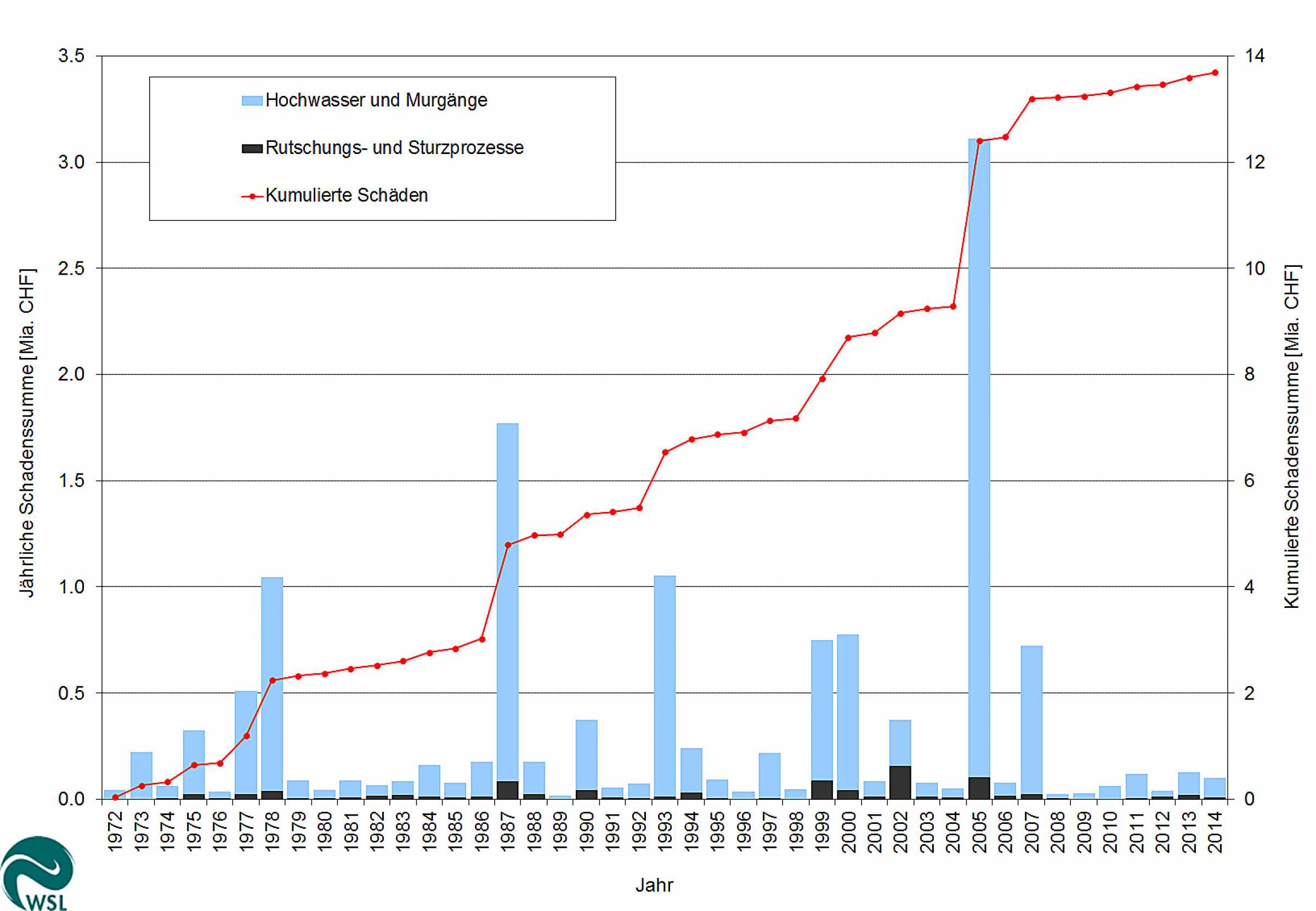
Statistical review: annual loss amount

Today, Friday, shower and thunderstorm activity from the southwest will increase again in the second half of the day. Rain is to be expected repeatedly until Sunday morning. MeteoSwiss expects the most precipitation between Friday noon and Saturday noon along the central and eastern foothills of the Alps as well as in the adjacent Central Plateau. In the mentioned areas, 20 liters per square meter can be expected. Locally, 35 liters are possible within a short time. On the remaining northern slopes of the Alps and in the Jura, 10 to 20 liters per square meter are expected to fall, in the remaining lowlands around 5 to 10 liters.

Thanks to the break in precipitation over the past few days, the water levels of the watercourses have fallen and are currently mostly in the danger level 1 range, with the exception of the lake outlets, in particular of Lake Thun and Lake Biel. In the case of the lakes bordering the Jura, water from Lakes Murten and Neuchâtel will flow into Lake Biel as soon as the level of Lake Biel falls below that of Lake Neuchâtel. In order to provide greater relief for the Jura lakes, the outflow from Lake Biel is regulated at a very high level in agreement between the federal government and the cantons. The authorities expect that it will take a long time (several weeks) until normality is reached.

The flood hazard on Lakes Neuchâtel and Biel and on the Aare below Lake Biel remains very high (level 4). On Lakes Thun and Murten and on the Aare below Lake Thun, it remains high (level 3).

The predicted precipitation until Sunday, May 10, may lead to a local increase in discharges, especially in small and medium-sized watercourses. Should the Emme catchment area be affected by the precipitation, the discharge at the Port weir would have to be throttled again immediately. In this case, the level of Lake Biel would quickly rise sharply.

In the vicinity of rivers and lakes with high water, the greatest caution is advised, as it is stated on the Natural Hazards Portal means. The instructions of the local authorities must be followed.

Incidentally, risk management of natural hazards is presented on the occasion of a Special show at the SECURITY 2015 (November 10 - 13). The trade show will be accompanied by a congress: in June 2015, the detailed Program.

Federal court: Company boss liable in the event of an accident at work

If an employee has an accident due to safety deficiencies, the company owner is liable. This is shown by a ruling of the Federal Supreme Court.

Anyone who allows their employees to handle machines that do not meet safety requirements is liable to prosecution.

A CNC lathe suddenly started up on its own during maintenance work. A worker who was inside the machine at the time suffered severe injuries to his head and arm.

The investigation revealed that the machine's safety gate monitoring system had been manipulated so that it could start moving even when the safety gate was open.

The Federal Court now ruled that the managing director was liable for the accident - even though the accident victim knew about the safety deficiency and was also partly to blame for the accident himself. One of the reasons given by the court was the "almost complete lack of a safety culture in the company" - which was demonstrated not least by the fact that the safety door monitoring system on other machines in the company had also been manipulated.

The managing director was sentenced to a conditional fine of 60 daily rates of 130 Swiss francs each for serious negligent bodily injury.

Go to Judgment with the detailed justification.

Asbestos exposure in Europe still precarious

Across the European Region, at least one in three people is exposed to asbestos at work and in the environment, according to WHO.

Asbestos abatement: Despite known dangers, the material is still legal in many European countries.

About one-third of the 900 million people in the WHO European Region live in countries that have not yet banned the use of asbestos in any form and may therefore be exposed to risks at work and in their other environments. In countries where asbestos is banned, exposure from past use persists. This reports the World Health Organization (WHO) on the occasion of the meeting on the subject and health in Haifa (Israel) and urges countries to abandon asbestos altogether.

Every year, 15,000 people across Europe die from asbestos-related diseases. These include, for example, lung, ovarian or larynx cancer, mesothelioma and asbestosis. The most efficient way to eliminate these diseases is to stop using asbestos in any form.

Asbestos continues to be permitted in 16 countries in the region, including Albania, Monaco, Russia and Ukraine.

The elimination of asbestos-related diseases was among the most important topics at the Haifa meeting. The event, which served as an overall assessment of progress in the field of environment and health in Europe, was attended by more than 200 representatives of countries in the European Region and international and nongovernmental organizations.

get_footer();