The current activity report of the Federal Nuclear Safety Commission is available.
Editorial - May 15, 2015
The Swiss Federal Nuclear Safety Commission (KNS) has its Activity report 2014 published. In addition to tasks related to the disposal of radioactive waste, the NSC dealt with reviews in the field of emergency preparedness, which had been decided by the Federal Council in 2012.
In 2012, the Federal Council had decided on various measures in the field of emergency protection on the recommendation of the "Interdepartmental Working Group for the Review of Emergency Protection Measures in the Event of Extreme Events in Switzerland" (IDA NOMEX). In this context, the NSC commented in the reporting year on the results of the review of the reference scenarios as well as the zone concept.
As part of the sectoral plan procedure for deep geological repositories, the NSC took part in the so-called interim technical meetings to assess the level of geological knowledge achieved in the potential siting areas and recorded its conclusions for the attention of the Swiss Federal Nuclear Safety Inspectorate (ENSI).
Other activities included commenting on the 2013 activity and annual report of the ENSI Council and commenting on three draft ENSI guidelines.
(Press release ENSI)
Disposable towels provide the best hygiene
A study shows that disposable towels spread fewer germs than other methods when drying hands.
Editorial - May 15, 2015
Clean hands - and now? If you want as few germs as possible on your hands, use disposable towels.
Disposable towels
A new University of Westminster study commissioned by the European Tissue Symposium (ETS) has found that hand drying with disposable towels reduces the spread of germs in the air and the risk of infection. This could help improve hygiene in washrooms.
The study, conducted by leading microbiologist Keith Redway, examined the potential microbiological contamination from hand drying and the potential risk of spreading germs into the air, especially when hand washing is not optimal. Four different methods of hand drying and three different test models were used to determine the differences between drying methods and their potential impact on the spread of germs from users' hands to others in and around public washrooms.
For this purpose, paper towels, a fabric towel dispenser, a hot air blower and a jet hand dryer were compared. A test model with an acid indicator with lemon juice, a test model with yeast and a test model in which bacterial transmission from the hands was determined when washing without soap were used. The study was published in the Journal of Hospital Infection in March 2015.
The result: the jet hand dryer distributed the liquid further and over a greater distance - up to 1.5 m - from the hands than was the case with the other methods of hand drying. Also, for each of the test models, the jet hand dryer dispersed germs the most, both in close proximity and at a greater distance.
The values determined on the drying device showed an average of 59.5 yeast colonies with the jet hand dryer compared to an average of only 2.2 yeast colonies when using paper towels. At a distance of 0.2 m, 67 colonies were counted with jet hand dryers compared to only 6.5 colonies with paper towels. At a distance of 1.5 m, 11.5 colonies were found with the jet hand dryer, compared with zero colonies with paper towels.
Numerous IT providers are in favor of Messe Stuttgart's decision to combine IT & Business, DMS EXPO and CRM-expo under the name "IT & Business - Trade Fair for Digital Processes and Solutions" in the L-Bank Forum.
Editorial - May 15, 2015
According to the press release, the respondents see the advantages in the sharpening of the profile, the simplification of communication and the improved possibilities to map the benefits of business IT. To this end, there will also be a comprehensive supporting program this year, for which the trade fair organizer has already defined topics with its partners. IT & Business will take place from September 29 to October 1, 2015.
"The positive feedback we have received from exhibitors encourages us in the conceptual design of the new IT & Business," says Gunnar Mey, Head of the Industry Department at Messe Stuttgart. "In the coming weeks, we will work on consistently implementing the concept and thus laying the foundation for a successful trade fair for our visitors and exhibitors."
Radium-contaminated workplaces to disappear by 2019
In the future, no persons in Switzerland should work or live in rooms contaminated with radium.
Editorial - May 14, 2015
In the watch industry, luminous paints containing radium were used in the past. Certain rooms are still contaminated.
In the future, no persons in Switzerland should live or work in rooms where there is unacceptable radiation exposure to radium that is hazardous to health. This is the goal of the Radium Action Plan 2015-2019, which the Federal Council has approved. It provides up to five million Swiss francs for radioactivity measurements and remediation work.
The action plan calls for locating sites potentially contaminated with radium, measuring them, and remediating them where necessary. In addition, part of the action plan addresses the monitoring of landfills where radium-containing waste may be stored. The plan will be reviewed regularly.
In June 2014, an address list of buildings was published in which luminous paint-setting workshops of the watch industry used to be located. In order to rule out any risk to the health of current residents, the FOPH, together with Suva, has carried out radioactivity measurements in recent months. The measurements have begun in the city of Biel, where initial pilot remediation work has already been carried out. Further measurements will now follow in the Jura arc. The measurements are part of the Radium Action Plan 2015-2019 drawn up by the FOPH.
In the watch industry, hands and dials were painted with luminous paints containing radium until the 1960s. This work was carried out in setting studios or by home workers. After the use of the radioactive paint was abandoned for health reasons, Suva inspected the workshops it supervised and remediated the contaminated sites. However, the former home-work sites were not systematically recorded and decontaminated. The original originators of the contamination can rarely be traced because they can no longer be found today or no longer exist.
Tyco: Slimming down the branch in French-speaking Switzerland
Tyco Integrated Fire & Security (Switzerland) AG converts the branch in Préverenges into a service center.
Editorial - May 13, 2015
The range of services in French-speaking Switzerland will still include fire alarm systems, access control, security lighting and intrusion detection systems.
Tyco Switzerland is planning a repositioning in French-speaking Switzerland. The provider of security and fire protection systems will gradually transform its branch in Préverenges into a service center from summer 2015, the company has announced. The company is thus focusing its performance and service portfolio in French-speaking Switzerland on fire alarm systems (BMA), access control (ZuKo), emergency lighting (ELS) and intrusion detection systems (EMA). Requests for quotations for new installations of fire alarm systems and access control systems will also be answered by the new service center in Préverenges, the company says. Administrative tasks will be handled centrally from Tyco headquarters.
The reorganization in French-speaking Switzerland and the resulting streamlining of the organization will make it possible to act more efficiently and in line with requirements thanks to centralized processes, according to the statement.
Pesticides: Danger for agricultural and garden workers
Pesticides pose a greater health risk than thought. Farmers and young children are particularly at risk.
Editorial - May 13, 2015
In particular, people who have to work with pesticides put themselves at risk of disease.
According to the study, two groups of people are particularly at risk: Firstly, people who are often exposed to high doses of pesticides due to their profession - this includes, for example, employees in agriculture or horticulture. In some cases, high levels of herbicides and fungicides can be detected in their hair - even if they protect themselves in accordance with regulations. Farmers' families are also more exposed than others thanks to their place of residence. High exposure to pesticides has been linked to various cancers, and can also damage the nervous system. This increases the risk of diseases such as Parkinson's or ALS (amyotrophic lateral sclerosis), and long-term neurological disorders can also occur.
The second group is no more exposed to pesticides than others, but is particularly sensitive to them: babies and young children. Exposure begins in the womb and can lead to birth defects, impaired mental development and infantile leukemia.
Greenpeace calls for the abandonment of the use of synthetic pesticides in agriculture. To this end, regulations should be tightened and research shifted to organic farming.
Radware: Team supplemented
The IT company Radware is launching a new sales offensive in German-speaking countries.
Editorial - May 13, 2015
Tom Haak
Tom Haak (48) joins the Radware team in Germany and Switzerland as the new Sales Manager Large Accounts. His arrival at Radware is part of the company's current sales offensive in the German-speaking region, the company said.
Haak has been working in the IT industry for 28 years, primarily in the field of IT security. Accordingly, he wants to establish Radware as a leading solution provider for application security in Germany and Switzerland as well - a position that the company already holds worldwide, according to information.
The first self-driving car
It has covered its first kilometers in the city of Zurich: the first autonomously driving car in Switzerland. It is still a prototype, but this type of mobility could be a reality in just a few years. According to experts, the self-driving vehicle brings more safety for all road users.
Editorial - May 12, 2015
What is the situation regarding safety?
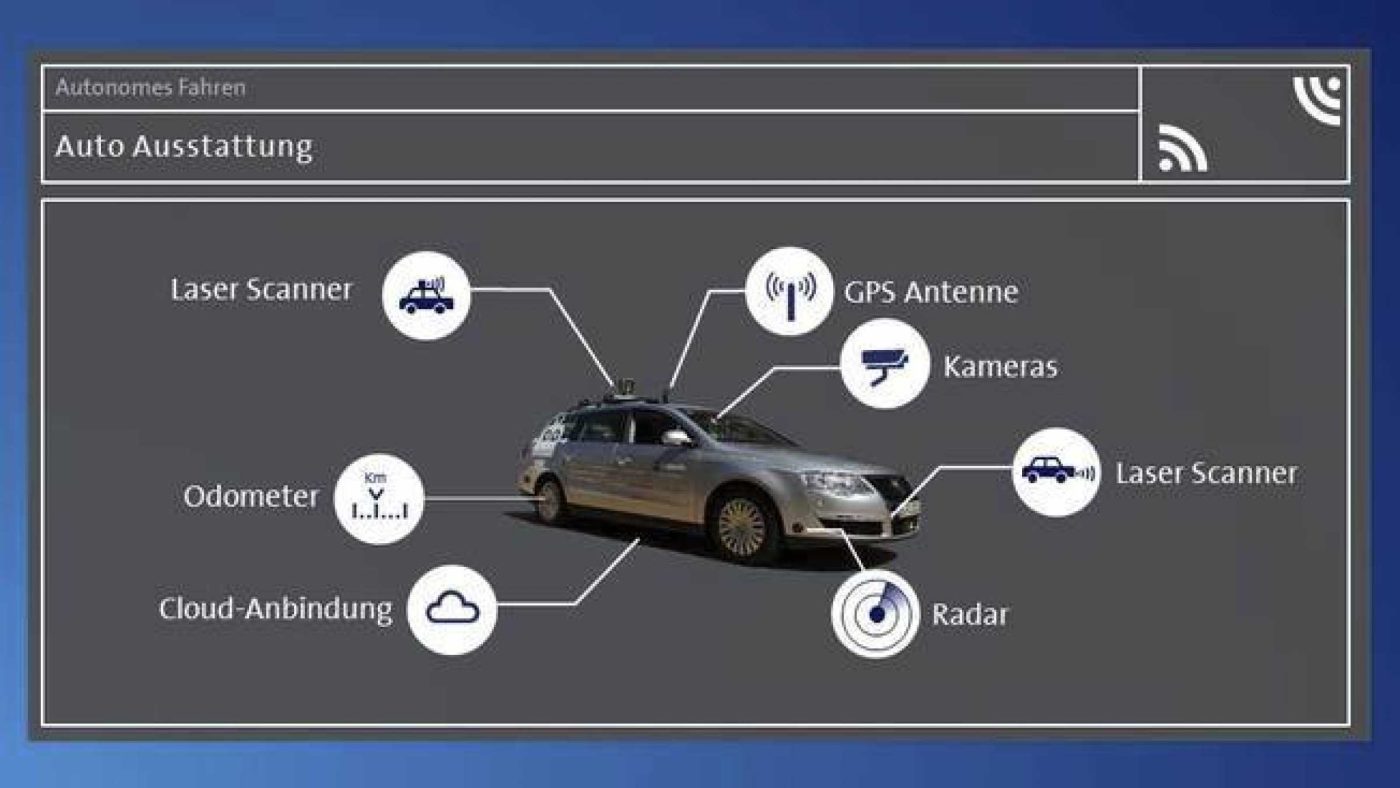
The self-driving car is equipped with a lot of technology.
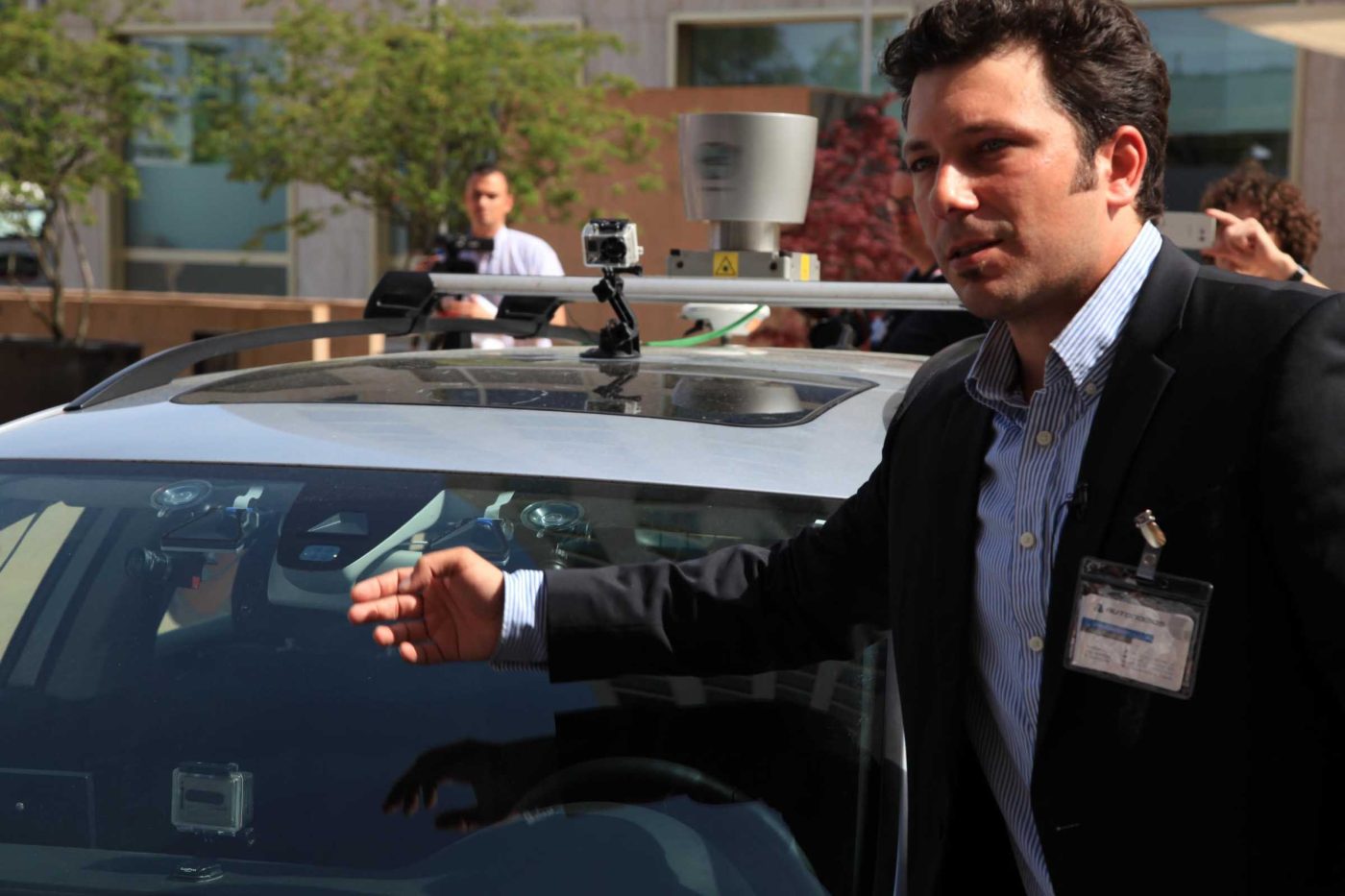
And truly, on the Test track in the city of Zurich, the specialist behind the wheel has his hands ready, but not on the steering wheel. The VW Passat drives leisurely behind the other vehicles, stops at red lights and also makes a stop in front of the pedestrian crossing. The computer drives, steers and brakes the car autonomously. It detects other vehicles and pedestrians via laser scanners, radar and video cameras. It is a vehicle equipped with high-tech. Special software analyzes the data, recognizes situations and gives the driving commands. At the media event, the PW drives back and forth along the test track several times - the thing seems to work. However, it will probably be years before the first series-produced vehicles are launched on the market. Self-driving cars have already been on test tracks abroad for some time. The technology required for this is said to be well advanced.
In order to gain initial experience with such a vehicle in this country as well, the Swisscom together with Autonomos Labs the self-driving car. The Department of the Environment, Transport, Energy and Communications (DETEC) had to grant the necessary exemption.
Digitization changes mobility
With the self-driving car, Swisscom is gaining experience for the mobility of the future. What does this mean for communication networks? How can vehicles, objects and people be optimally networked? Effective traffic management systems lead to less congestion, which relieves the environment and reduces economic costs. Good reasons for Swisscom to get involved in the mobility of the future. Christian Petit, Head of Swisscom Enterprise Customers, says: "Swisscom will not become an automobile manufacturer. But the innovations around the automobile in the future lie in networking with the environment. That's why the self-driving car is a prime example of digitalization and of great interest to us." As a leading ICT provider, Swisscom is predestined to network vehicles, objects and people. In addition, Swisscom wants to initiate a discussion. Self-driving cars will raise many questions: Are people still allowed to drive a car if it would be safer without the human factor? How will laws be adapted? Who is liable in the event of accidents?
Step by step to the self-driving car
Swisscom already analyzes anonymized position data from cell phones for the Federal Roads Office, for example, and delivers forecasts on traffic trends in Big Data projects. Thanks to the Internet of Things, a self-driving vehicle will in future know before it arrives which parking spaces are free and target them accordingly, according to the report. Swisscom is also currently testing an alternative network for this Internet of Things in Zurich and Geneva, via which everyday objects communicate with minimal energy consumption.
It will still be some time before self-driving cars can be seen driving on Swiss roads across the country. Step by step, the technology will take over the wheel. With comprehensive networking, safety, comfort and traffic management would be even better, experts say.
More security for bomb disposal specialists
Defusing a car bomb poses great risks for the task force. A robot developed in Switzerland and elsewhere reduces the risk.
Editorial - May 12, 2015
Thanks to the robot, emergency forces can remove suspected terrorist vehicles from a safe distance instead of endangering themselves.
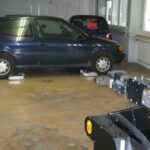
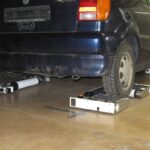
Together with five European partner institutions, ZHAW researchers have developed a robot for bomb disposal units. It enables emergency forces to remove suspected terrorist vehicles from a safe distance instead of entering the danger zone themselves.
If a car bomb is suspected, robots could in future serve the police or the army as a mobile evacuation squad. As part of the EU FP7 research program, ZHAW researchers, together with five European partner institutions from four countries, have developed the 'Autonomous Vehicle Emergency Recovery Tool' (AVERT) was developed. It enables emergency services to quickly and safely remove blocking or suspicious vehicles from delicate positions - for example, in parking garages, underground garages or tunnels.
To do this, the robot is first brought to the site manually. Equipped with cameras and sensors, it creates a 3D image of the entire scene and then moves autonomously to the vicinity of the vehicle to be moved. The robot then deploys four flat mini-robots equipped with scanners - so-called 'bogies'. These autonomously drive under the wheels of the vehicle and lift it a few centimeters. The emergency services then have the option of driving the vehicle away remotely or semi-automatically. This is made possible by the control system for the overall AVERT system developed at the Institute for Mechatronic Systems (IMS) of the ZHAW School of Engineering. ZHAW students were also involved in the research as part of their bachelor's and master's theses.
"Previous methods of removing such vehicles were very dangerous for defusers, especially if the vehicles were in hard-to-reach places," said ZHAW project manager Christopher Henschel. "With AVERT, responders can move the vehicle to be removed in any direction from a safe distance, creating more space for defusing operations - without endangering infrastructure or personnel."
In collaboration with bomb disposal specialists in Germany, the United Kingdom and Switzerland (Zurich Airport Police and the Scientific Service of the Zurich City Police), AVERT has been tailored to practical needs. During the last months, the robot has already proven itself in various test scenarios. In the near future, AVERT is expected to ideally complement existing strategies and tools and thus increase security during critical operations.
A self-driving car equipped with a lot of IT
A self-driving car is currently on the road in the city of Zurich for test purposes. Swisscom wants to use it to find out, among other things, what this means for communications networks.
Editorial - May 12, 2015
Equipped with a lot of technology: the self-driving car.
Hands free on the road
These days the Swisscom together with the company Autonomos Labs with a self-propelled vehicle on the road and gaining initial experience for the mobility of the future. What does this mean for communication networks? How can vehicles, objects and people be optimally networked? Effective traffic management systems lead to less congestion, which relieves the environment and reduces economic costs. Good reasons for Swisscom to get involved in the mobility of the future. Christian Petit, Head of Swisscom Enterprise Customers, says: "Swisscom will not become an automobile manufacturer. But the innovations around the automobile in the future lie in networking with the environment. That's why the self-driving car is a prime example of digitalization and of great interest to us." As a leading ICT provider, the company is predestined to network vehicles, objects and people. Swisscom also wants to initiate a discussion on this matter. Self-driving cars will raise many questions: Are people still allowed to drive a car if it would be safer without the human factor? How will laws be adapted? Who is liable in the event of accidents?
Swisscom already analyzes anonymized position data from cell phones for the Federal Roads Office, for example, and delivers forecasts on traffic trends in Big Data projects. Thanks to the Internet of Things, a self-driving vehicle will in future know before it arrives which parking spaces are free and target them accordingly, according to the report. Swisscom is also currently testing an alternative network for this Internet of Things in Zurich and Geneva, via which everyday objects communicate with minimal energy consumption.
It will still be some time before self-driving cars can be seen driving on all Swiss roads. Step by step, the technology will take over the wheel, they say. With comprehensive networking, safety, comfort and traffic management will be even better, experts say.
After the test, Swisscom plans to publish a comprehensive report, according to a statement made at the media conference in Zurich. The paper will also show where any security gaps still exist in the IT area.
Sales team expanded
Salto Systems AG in Eschlikon has strengthened its sales team with David Wuffli and René Mogy, according to a statement.
Editorial - May 12, 2015
David WuffliRené Mogy
David Wuffli (45) will in future be responsible for sales at the Salto-solutions in western Switzerland. His responsibilities include supporting partners and acquiring new projects in the region, according to the statement. Wuffli looks back on 15 years of experience in the construction and security industry. He was most recently employed as customer service manager for the city of Lausanne at Schindler Aufzüge, and before that spent nine years as head of the Western Switzerland branch at Assa Abloy and three years as head of the Lausanne branch at Securiton.
René Mogy (53) is the new Sales Engineer for Northwestern Switzerland. His focus is on the object and project business as well as customer and partner support. Mogy has many years of experience in selling complex solutions in the areas of security, automation, access control and door engineering. He previously worked as a consultant in the contract business at Assa Abloy Switzerland and Alpiq Intec Ost.
Bressaucourt airfield: safety process certified
The safety processes at Bressaucourt airfield meet the requirements of the International Civil Aviation Organization (ICAO). The Federal Office of Civil Aviation (FOCA) has issued the corresponding certificate to the operating company Sociéte Coopérative de l'Aérodrome du Jura (SCAJ).
Editorial - May 11, 2015
Photo: www.aerojura.ch
The ICAO has defined the specifications for safety-relevant processes at airfields in its standards and recommendations. The requirements contained in Annex 14 define, among other things, how an airfield must organize the refueling of aircraft, the deployment of the fire department, the periodic condition check of runways and approach lighting, and snow removal. With these requirements, ICAO wants to ensure that the infrastructure at an airfield functions safely and smoothly at all times. The safety-relevant processes must be recorded in an airfield manual, which also forms the basis for a safety management system. Such a system describes how an organization identifies existing risks, evaluates them and reduces them with suitable measures.
The FOCA checks in an audit lasting several days whether the airports' processes and procedures comply with the specifications and are applied as described. After successful initial certification, the FOCA in Bressaucourt also conducts recertification audits every five years to determine whether the airports' safety-relevant processes still comply with ICAO specifications.
The Bressaucourt airfield is the twelfth airfield in Switzerland to be certified by the FOCA in accordance with ICAO requirements, following Geneva, Zurich, St. Gallen-Altenrhein, Bern, Sion, Lugano-Agno, Les Eplatures, Samedan, Birrfeld, Ecuvillens and Grenchen.
In a further step, the certification of the last Swiss regional airport of Lausanne is planned. The binational airport of Basel-Mulhouse will be certified by the French supervisory authorities, with the participation of the FOCA.